What only a human can deliver
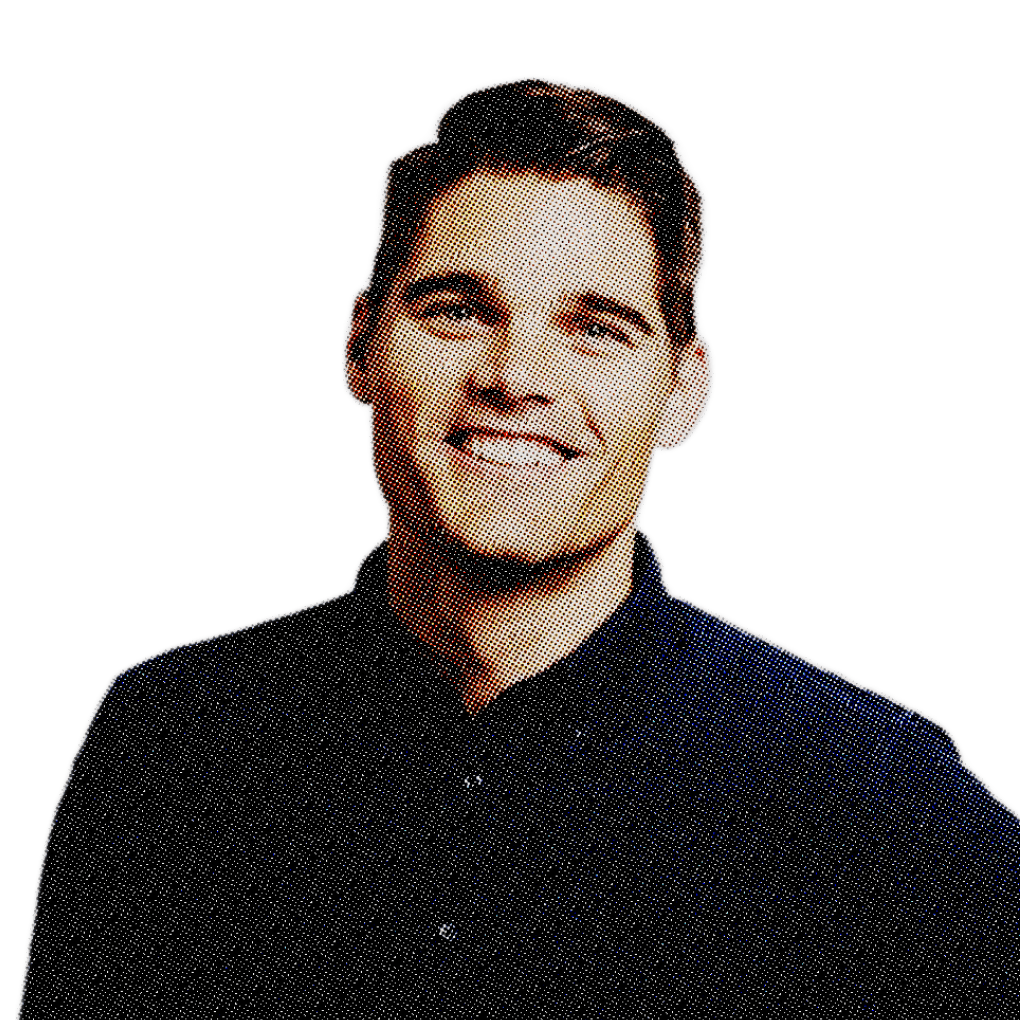
Travis Bryant runs the US mid-market GTM team at Anthropic, responsible for over 4,000 accounts across mid-market tech and industries, including Mercury, Brex, Strava, and Airtable. Before Anthropic, he spent years in private practice working with Redpoint Ventures to advise early-stage companies.
The SaaS era chopped one customer relationship across four specialist roles because no single human could be in deep enough to hold all of it. In Travis’ view, AI runs that motion in reverse: it absorbs the work that used to take RevOps, consultants, and four specialists, leaving a single generalist to hold the whole relationship and do what only a human can.
There was never a universal playbook
There’s never been a universal playbook for GTM. I’ve worked with a lot of young startups, figuring out what their sales system should be. That work starts with what makes your offering unique and special, and who stands to benefit most from it. In every successful company, the playbook follows. That drives which humans you hire and which process they run. Methodologies like MEDDPICC, proactive selling, and command of the message are useful training techniques. They are not the playbook. AI has not changed whether the playbook is or isn’t universal. It was always bespoke. What changes is what the human inside it is doing all day.
There’s never been a universal playbook for GTM. I’ve worked with a lot of young startups, figuring out what their sales system should be. That work starts with what makes your offering unique and special, and who stands to benefit most from it. In every successful company, the playbook follows. That drives which humans you hire and which process they run. Methodologies like MEDDPICC, proactive selling, and command of the message are useful training techniques. They are not the playbook. AI has not changed whether the playbook is or isn’t universal. It was always bespoke. What changes is what the human inside it is doing all day.
In my team, the mantra is velocity with depth. Every AE has a handful of accounts where the relationship can be eight-figure annual turnover. They also have hundreds of accounts in their book that they have to cover with Claude, because they only have a finite amount of synchronous time. We are the research lab for go-to-market: the place where the experimental techniques get worked out, how you partner a human AE with Claude agents to do mass customization of outreach, and maximize the time that’s actually human. The North Star is: what are the conversations that only a human can properly deliver?
The generalist is back
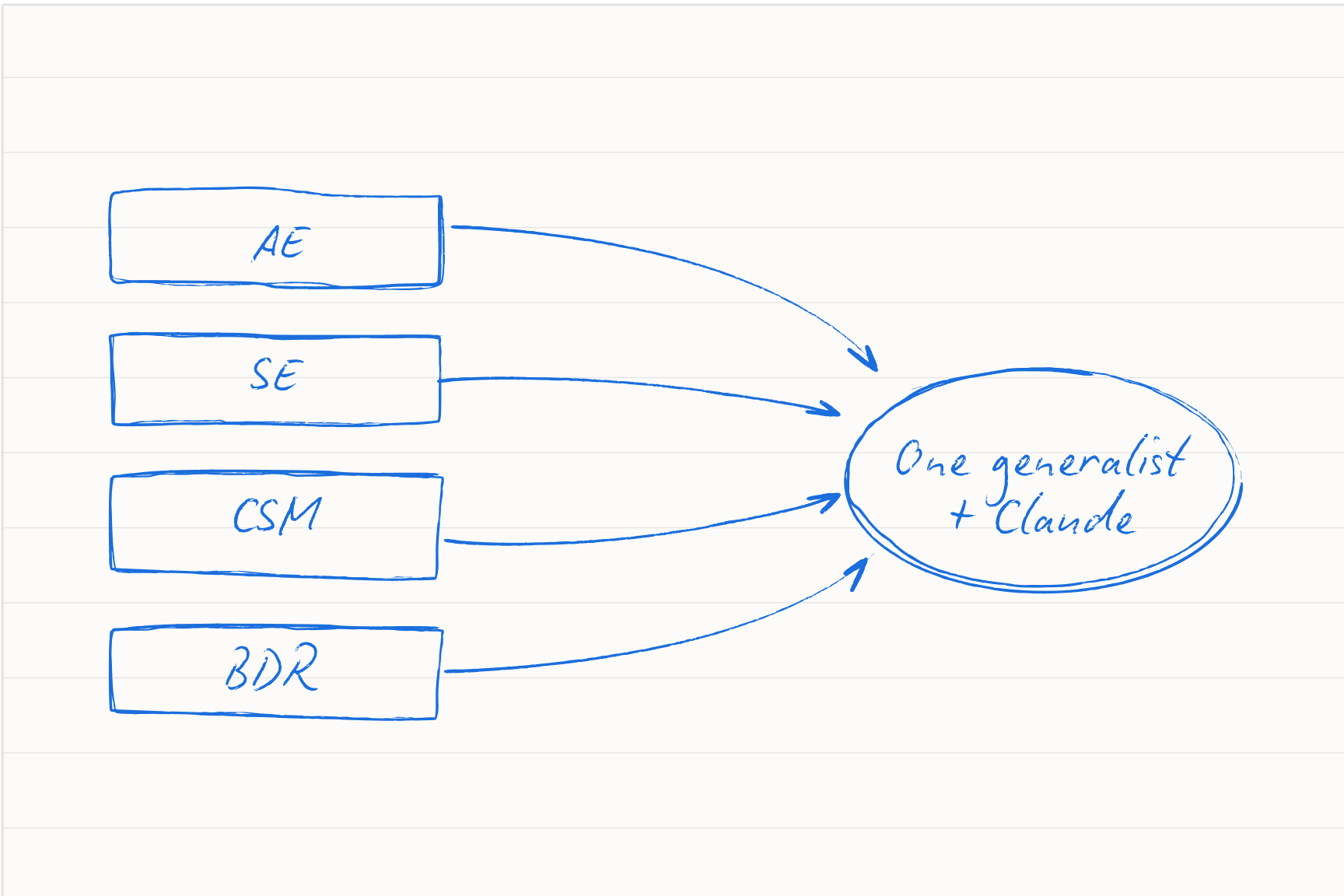
In the SaaS-era GTM, you had specialized skill sets. The AE was the commercial person. The sales engineer was the technical person. The CSM was adoption. The BDR was leads. We split the entire customer lifecycle into different roles because it was impossible to be great at all of it.
If you’re starting net-new now, you can envision one human face. Properly augmented by AI, that person is the CSM, and the SE, and the BDR. They’re not just inch deep. They’re deep in all those disciplines because of AI. The generalist is back.
For example, our product footprint at Anthropic is insane at the rate we’re shipping. There’s no individual, solutions engineer or otherwise, who can keep up with everything. So we have an internal tool where if you’re asked a question on a customer call, it gives you instant answers to help you respond. This is what augmenting the individual looks like in practice.
The line between human and machine
I am not a believer in the AI BDR: that AI can do thoughtful discovery and articulate product value to a customer. We need a human to have that dialogue, especially for newer products that require more care to understand how they fit into your workflow.
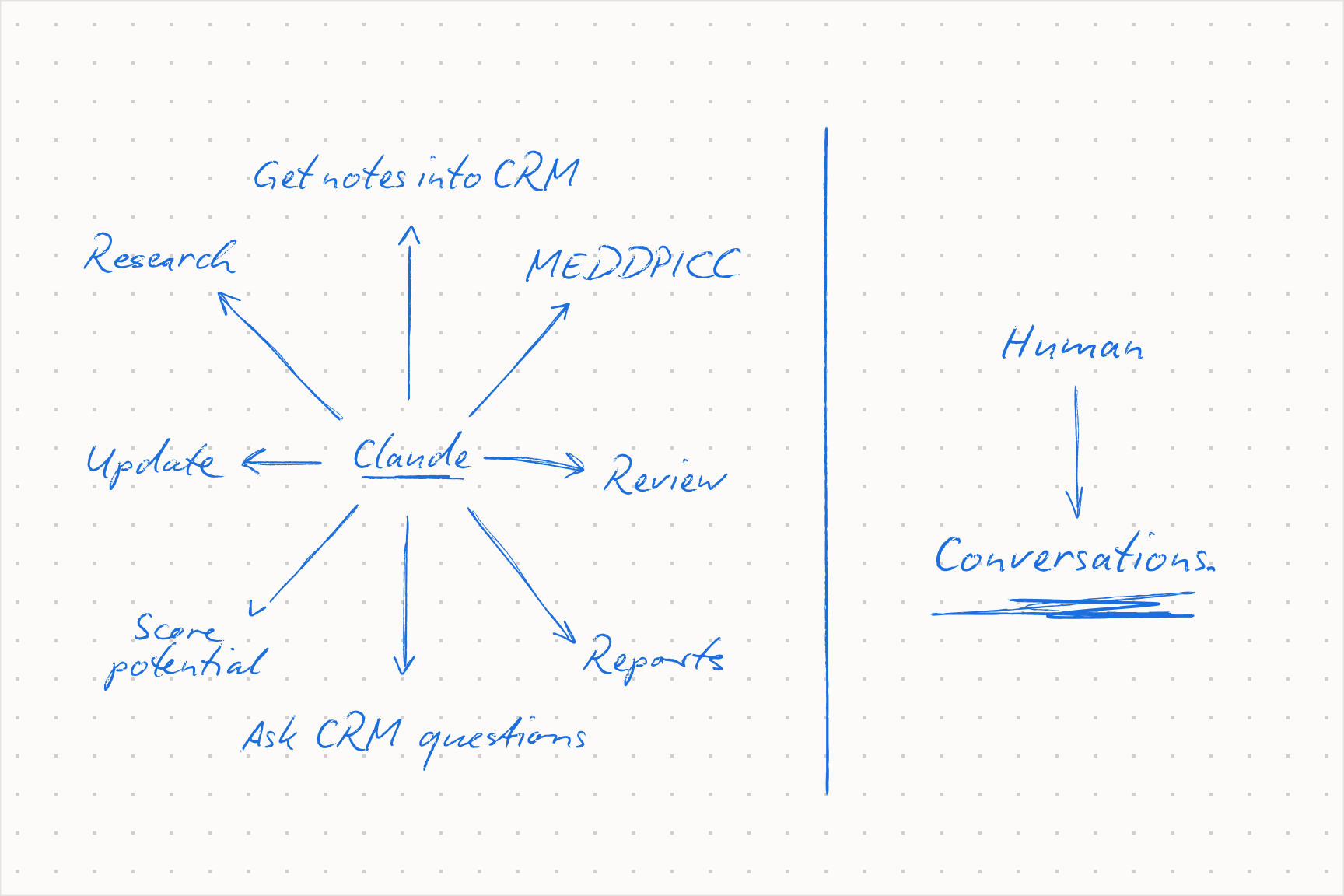
But we ask a lot of a salesperson that isn’t actually customer-facing. For us it could be getting the notes out of Gong and into the CRM, updating MEDDPICC fields, getting reports together. We want to use Claude as much as possible to free the AE for those human tasks.
What Claude or any other LLM could do before and what it can do now is expanding so quickly that a lot of people are stuck in the muscle memory of “this has to be a human.” It doesn’t always. Take account potential. You might want to look at every company in a territory and ask which are the most ripe. You could have RevOps and Strategy do that, or hire an external consultant. Now I just have a conversation with Claude about how to score the potential of a group, and Claude does deep research, company by company, across a 4,000-account book.
What Claude or any other LLM could do before and what it can do now is expanding so quickly that a lot of people are stuck in the muscle memory of “this has to be a human.” It doesn’t always. Take account potential. You might want to look at every company in a territory and ask which are the most ripe. You could have RevOps and Strategy do that, or hire an external consultant. Now I just have a conversation with Claude about how to score the potential of a group, and Claude does deep research, company by company, across a 4,000-account book.
The only real thing that has to be a human are the conversations. There’s no substitute for someone who’s genuinely curious, who wants to figure out how a company and the people in it tick, and then does their best to articulate why we can help them. Everything else, we can use Claude to deliver.
Measure live time, AI leverage, and game film
Every business is judged against its targets. But when I’m measuring the performance of someone on my team, it’s the skill of the human behavior, the thoughtful discovery and well-articulated value proposition, and the intensity by which they apply that skill. That’s my responsibility as a leader.
I look at three signals:
- How much of their week is live customer-facing conversations. The ideal is eight hours of every day available for live customer conversations, while ambient Claude is doing the background work, setting the to-do items, capturing notes, updating the CRM. No one ever reaches that. But you can optimize.
- AI usage. Cowork is a major unlock: you can offload work to an AI to execute autonomously on your behalf. I look at what Skills and Routines people are building. I want them offloading more to AI because every task Claude absorbs is time returned to the conversations only a human can have.
- Coaching. We use Gong recording. That’s where I sit as a coach, looking at game film to see how the skill of layered discovery and crisp value articulation is going.
Human empowerment, not human replacement
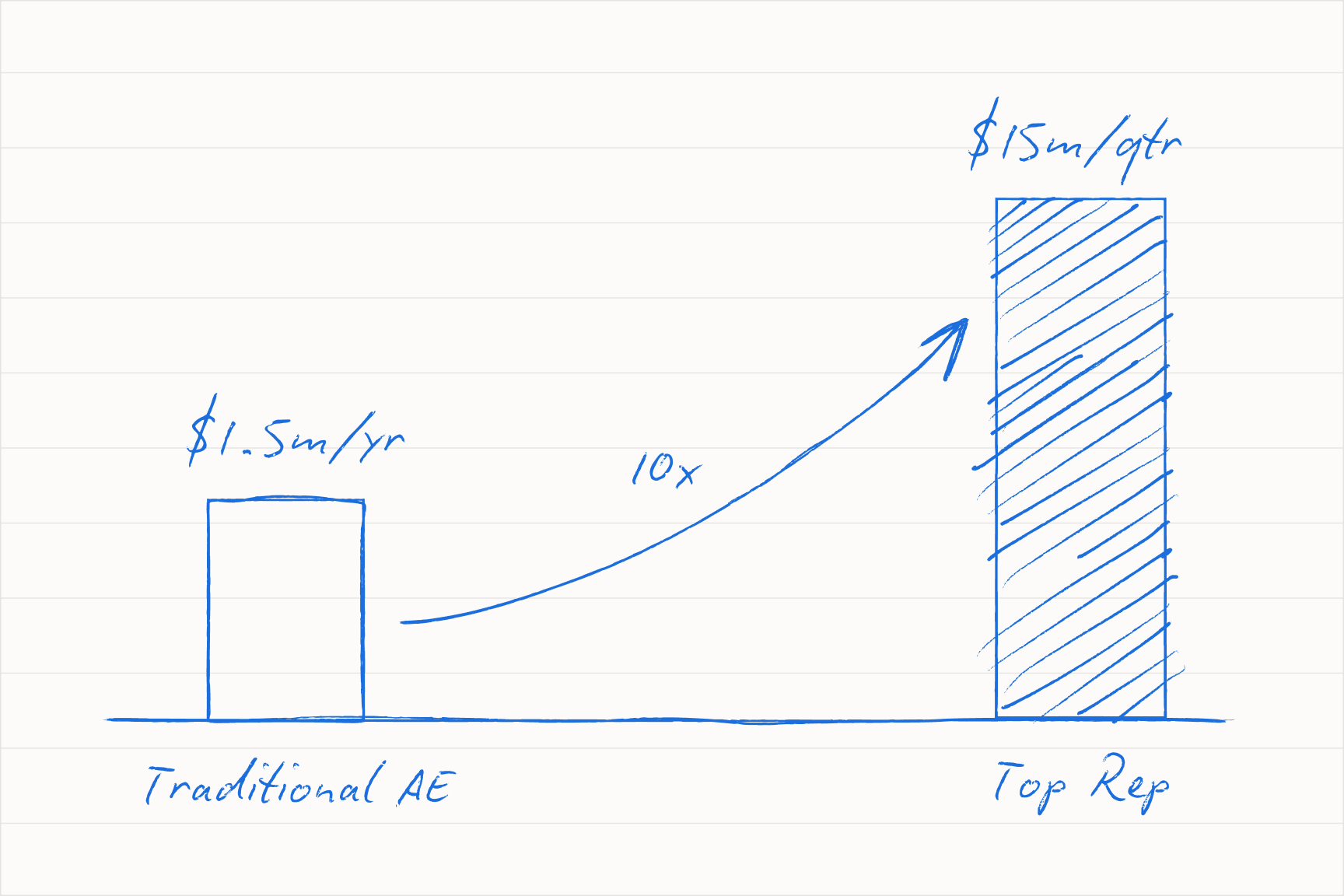
At Anthropic, our mission is to augment the individual. It’s not to replace the developer with Claude Code. It’s to let one developer ship 10x more. I have AEs that in a traditional SaaS world might be responsible for $1.5 million in annual contract value. Now I have people doing 10x that in a quarter. We’re redefining what it means to be a modern sales professional.
I feel similarly about the roles of doctors and nurses. AI can be pretty good at scanning an MRI. But the nurse cannot be replaced: you need bedside manner to comfort people. That is increasingly the role of a customer-facing professional. The human connection. We hope Claude can superpower that taste, ingenuity, and creativity – everything irreplaceable about the human.
Travis Bryant
Head of US Mid-Market GTM at Anthropic