Build the system before the message


Roniesha Copeland has spent over a decade building and scaling go-to-market teams for developer-led platforms, most of that time at Stripe, before running sales at v0 and now serving as VP Sales, Strategic Accounts at Vercel.
In this entry, Roniesha describes outbound as the right three things: ICP, narrative, and timing. Get the order right, treat every campaign as an experiment, and you stop confusing enthusiasm with reason to buy.
Outbound = ICP + narrative + timing
Outbound is a system: picking the right people to go after, a compelling message that gets them interested enough to engage, and sending it at a moment and via a channel where it resonates enough for them to want to talk to you.
AI supercharged the system. It made the data layer truly actionable: you can now see all your accounts, contacts, and intent signals across ten data sources in one view. It made timing precise in a way it never was before, and unlocked what “narrative” actually means in practice: you’re not just crafting a message, you’re matching it to a moment.
Intent data tells you something is top of mind. Job postings tell you they’re investing in the problem your product solves. Executive hires signal change in the account. These signals don’t just tell you who to contact, they tell you what to say and why now. And the teams consistently booking meetings are not just getting the person and timing right, they’re using multiple channels: email, phone, and LinkedIn, to reach buyers where they’re willing to engage.
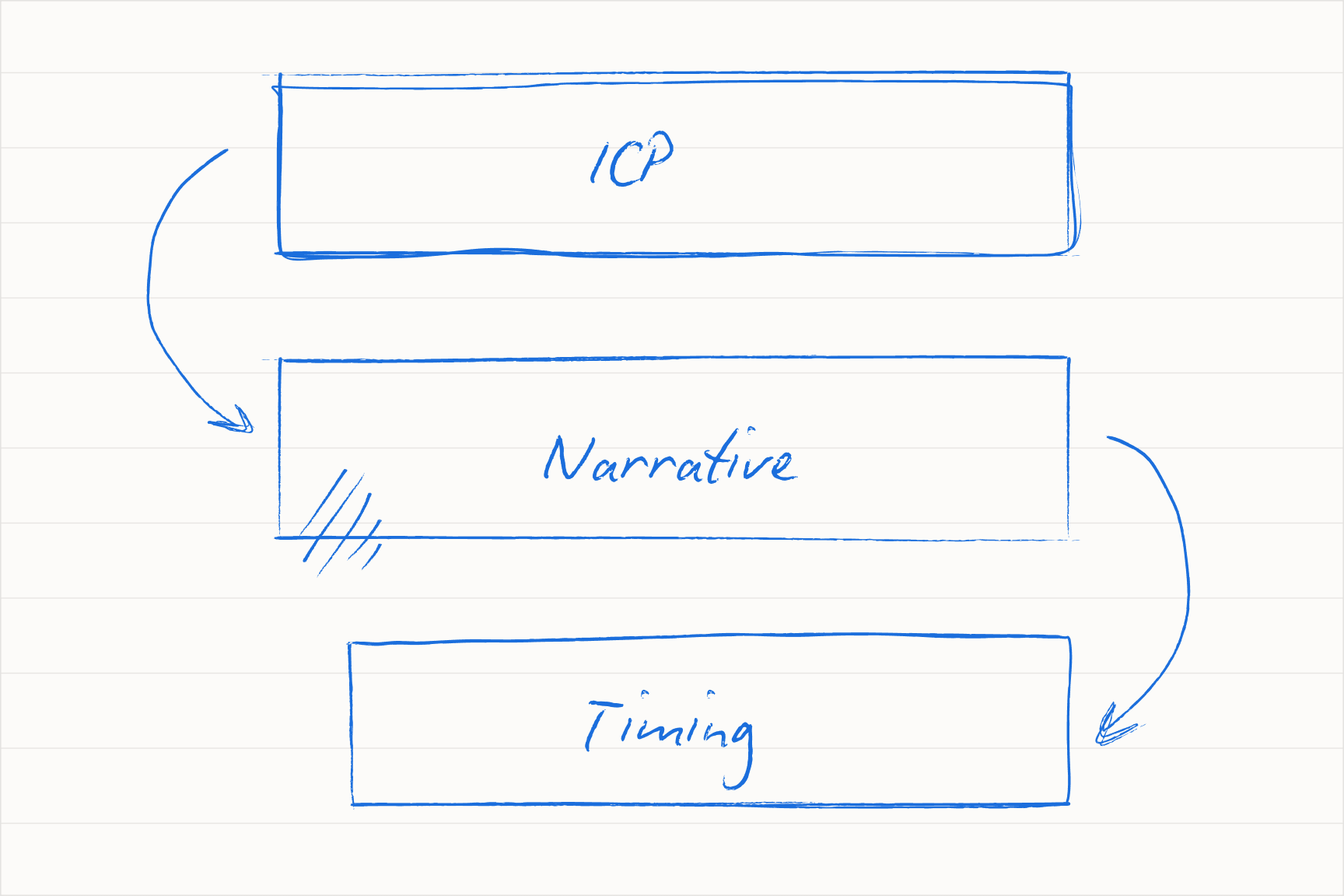
The instinct for an early team is to start with narrative: write the email, test the subject lines, tweak the hook. But you need to lay the data foundations for ICP and intent first, or you’ll spend the next year retrofitting a system built to acquire the wrong customers. The constraints you’re under as a startup can actually force you to do this well. You can’t afford a sprawling ops team, so you think harder about what you’re instrumenting. The teams that get this right build the system before they write the message.
The instinct for an early team is to start with narrative: write the email, test the subject lines, tweak the hook. But you need to lay the data foundations for ICP and intent first, or you’ll spend the next year retrofitting a system built to acquire the wrong customers. The constraints you’re under as a startup can actually force you to do this well. You can’t afford a sprawling ops team, so you think harder about what you’re instrumenting. The teams that get this right build the system before they write the message.
ICP is a stack: company, persona, intent, revenue
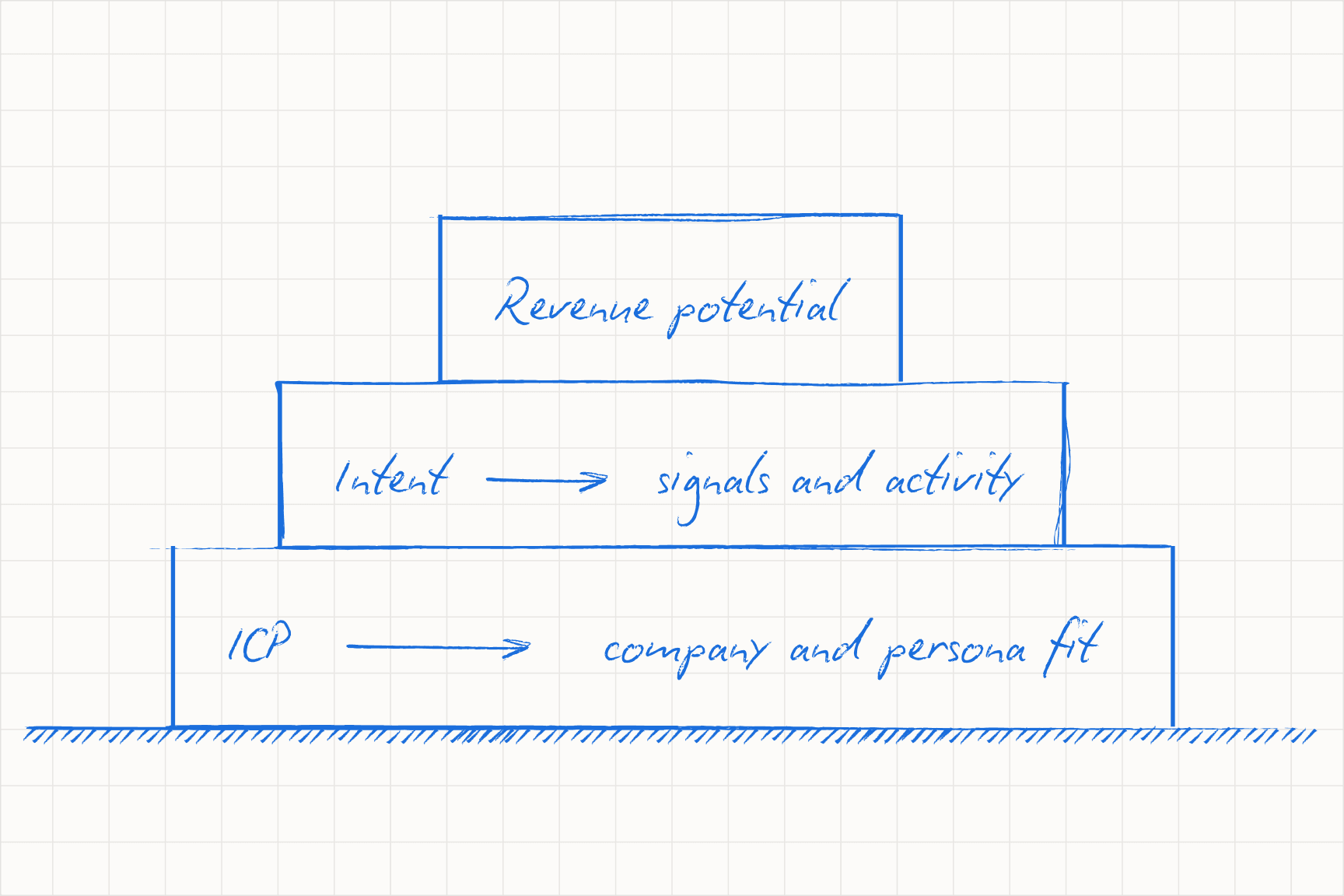
Start with the ICP. If you don’t know yours for sure, build a hypothesis around it. If you’re a PLG company, you can already see the pattern of people who use your product. The question becomes: what pain am I solving, for which type of organization, and who inside it is making or influencing that decision? Once you know the pain, your messaging anchors on it.
Company and persona are the base. That’s your fit layer. Intent goes on top, and that’s the layer AI has unlocked. If your telemetry says a lead at a growth-stage startup has been posting about the issue you solve, that account gets a higher intent score than one where you just have good fit. Revenue matters, but not as a filter, as a multiplier on effort. Fit and intent tell you who to pursue. Revenue tells you how much to invest in the pursuit.
The PLG altitude problem
Once you’ve defined your ICP, the question is what you actually say to them. With v0, Vercel’s generative UI app builder, we had a hypothesis that sounded airtight: the best way to experience the product is the product. So we custom-built an application for our ICP at each target company. Open rates were very high. Conversions were zero.
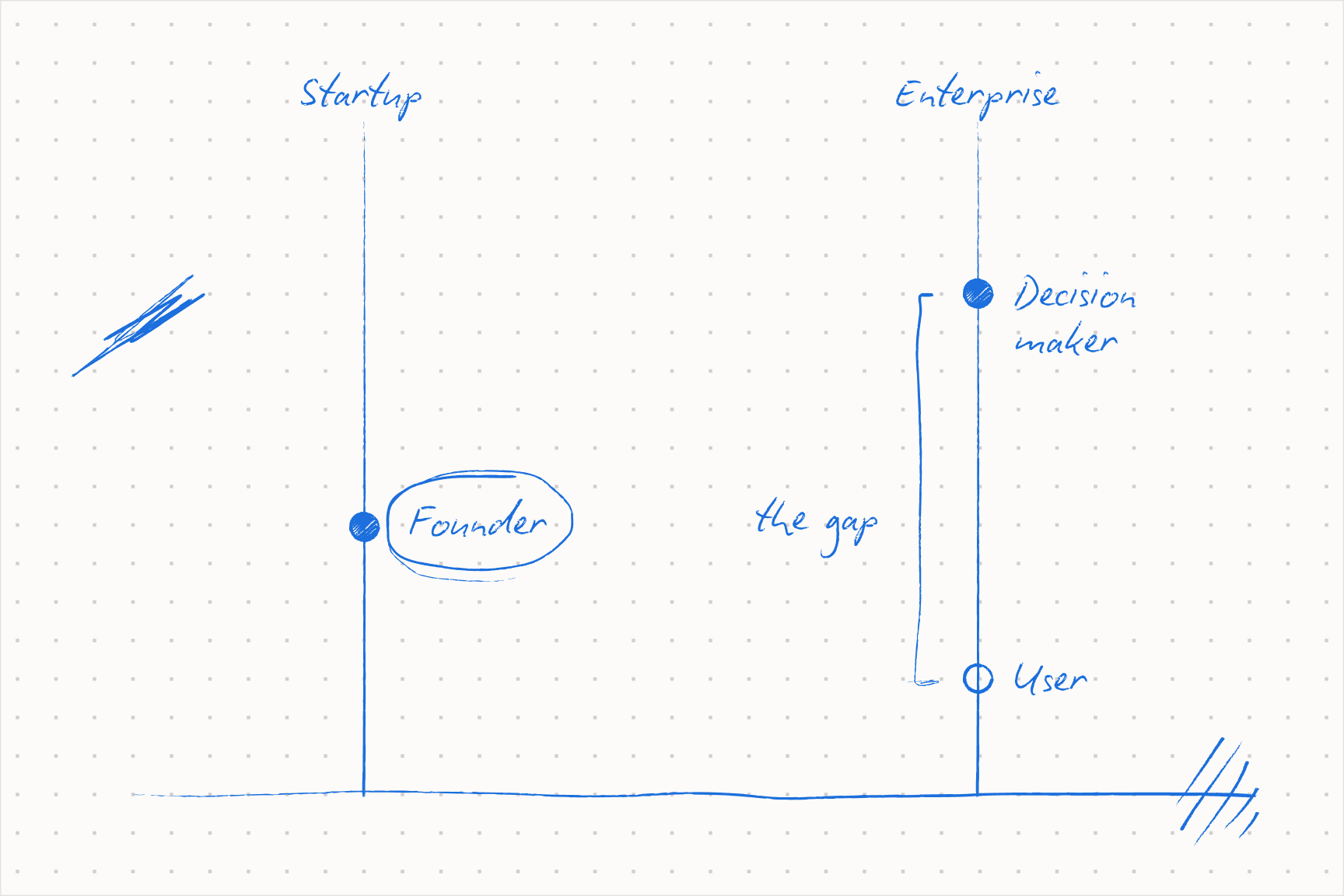
The reason is altitude. In a startup, the buyer and the decision-maker are the same person. The founder is using the product and owns the budget. As soon as you start targeting larger companies, those two roles get further and further apart. At enterprise scale, you’re trying to reach a senior decision-maker who owns the budget, and they don’t care about the product. They care that the product solves a business problem. Leading with product puts you at the wrong altitude.
The reason is altitude. In a startup, the buyer and the decision-maker are the same person. The founder is using the product and owns the budget. As soon as you start targeting larger companies, those two roles get further and further apart. At enterprise scale, you’re trying to reach a senior decision-maker who owns the budget, and they don’t care about the product. They care that the product solves a business problem. Leading with product puts you at the wrong altitude.
That’s the piece PLG teams often get wrong. Developer love and end-user awareness are real goals, but community and marketing will drive that better than outbound. Outbound should leverage what you learn from PLG to aim higher.
Enthusiasm is not a buying signal
But the mistake I see most often isn’t altitude, it’s qualification. Most early teams are excited that other people want to buy their product, and they don’t pressure-test that excitement. That is not qualification. Enthusiasm is not the same as reason to buy.
You need to know they have a pain point you can solve, and that it’s painful enough to solve now. If those two things aren’t there, the deal either doesn’t exist or doesn’t close in a time horizon that makes sense for you. You’ll just be having pleasant conversations with people who love talking about your product, and nothing will close.
You need to know they have a pain point you can solve, and that it’s painful enough to solve now. If those two things aren’t there, the deal either doesn’t exist or doesn’t close in a time horizon that makes sense for you. You’ll just be having pleasant conversations with people who love talking about your product, and nothing will close.
Treat everything as an experiment
Most of all, think of everything as an experiment. You have a hypothesis, you structure activities around it, you decide in advance how you’re going to evaluate the outcome, and then you decide whether to keep investing or move on.
When you work that way, things feel less trapdoor. You’re less committed to a thing you’ve decided has to be absolutely right. You test personas, you test messaging, you test tactics. Spend too long designing the perfect version, and you’ll get the insights much slower than something scrappier would. The teams I’ve seen do this well are always running something, and willing to kill the thing that isn’t working.
Roniesha Copeland
VP Sales, Strategic Accounts at Vercel