Pricing is a product


Ben is Head of Billing EMEA at Stripe, overseeing the billing and monetization business across the region, where he works with companies from early-stage startups to public enterprises on how they price and package their products. He previously led Stripe’s SaaS platforms business in EMEA.
For decades, pricing was a finance exercise alone. In this entry, Ben explains how AI has made compute costs inseparable from customer value, which means pricing is now a product surface you iterate on, and the teams that win treat it that way.
AI has shifted how companies monetize
Pricing used to be something you set once and revisited annually. Now it’s a product you iterate on continuously, and your infrastructure needs to support that. Products are evolving faster, and pricing must keep pace with how they deliver value to customers and accrue cost for you.
The rise of usage-based pricing has made spend and value inseparable, especially because value can differ so much from one user to the next. The same tool used by an engineer to ship a prototype, versus a casual user running a search, creates entirely different value. So how do you price to capture that value and the difference in willingness to pay?
Pricing is a growth lever
As usage-based spend fluctuates by nature, customers increasingly expect real visibility, predictability, and control in their billing. They want to know what they’re spending, and they want to set limits so they don’t accidentally overspend.
As usage-based spend fluctuates by nature, customers increasingly expect real visibility, predictability, and control in their billing. They want to know what they’re spending, and they want to set limits so they don’t accidentally overspend.
It’s all about the cost of compute. You need a model that scales with usage, or you’ll blow up your margins. You want pricing that delivers value to customers while maintaining the healthy unit economics you need to grow.
Pure seat pricing, as it’s worked for the past year or two, leaves money on the table. Power users can consume an infinite amount of compute while paying the same flat subscription fee, so your costs go up without a matching increase in revenue. But pure usage-based creates budget unpredictability: finance teams are hesitant to sign up for costs they can’t forecast. They need tools to predict costs, cap spend, and drill into what’s driving usage.
So while AI has changed how companies monetize, customer expectations have changed alongside it. They need:
- Predictability: “How much will this cost me if I run it?”
- Visibility: “Where can I see my current usage and spend? Is it within budget?”
- Control: “Can I be alerted and take action accordingly before I hit my limit?”
Because of this shift, monetization has become the new growth lever for B2B SaaS teams, from early-stage teams launching AI tools to more well-established companies expanding into AI products to drive growth. The key is treating pricing as core to product, go-to-market, and revenue strategy.
Pricing used to be the job of product and finance teams. But now any team building AI-native products or hybrid PLG+SLG motions is learning that pricing is one of the most powerful product levers they have. If they’re not experimenting with pricing the same way they experiment with the product or growth levers, they’re falling behind.
This changes your stack. Your billing system and entire quote-to-cash process needs to be flexible enough for you to reiterate on your pricing model fast. You need to track:
- Usage: What your customers are consuming right now
- Revenue: What you’re earning, live
- Customer behavior: How they’re engaging with your product
To do this well, you need clear ownership of end-to-end monetization. Someone who drives pricing decisions (the “what” and “why”) and/or owns the infrastructure to execute them (the “how”).
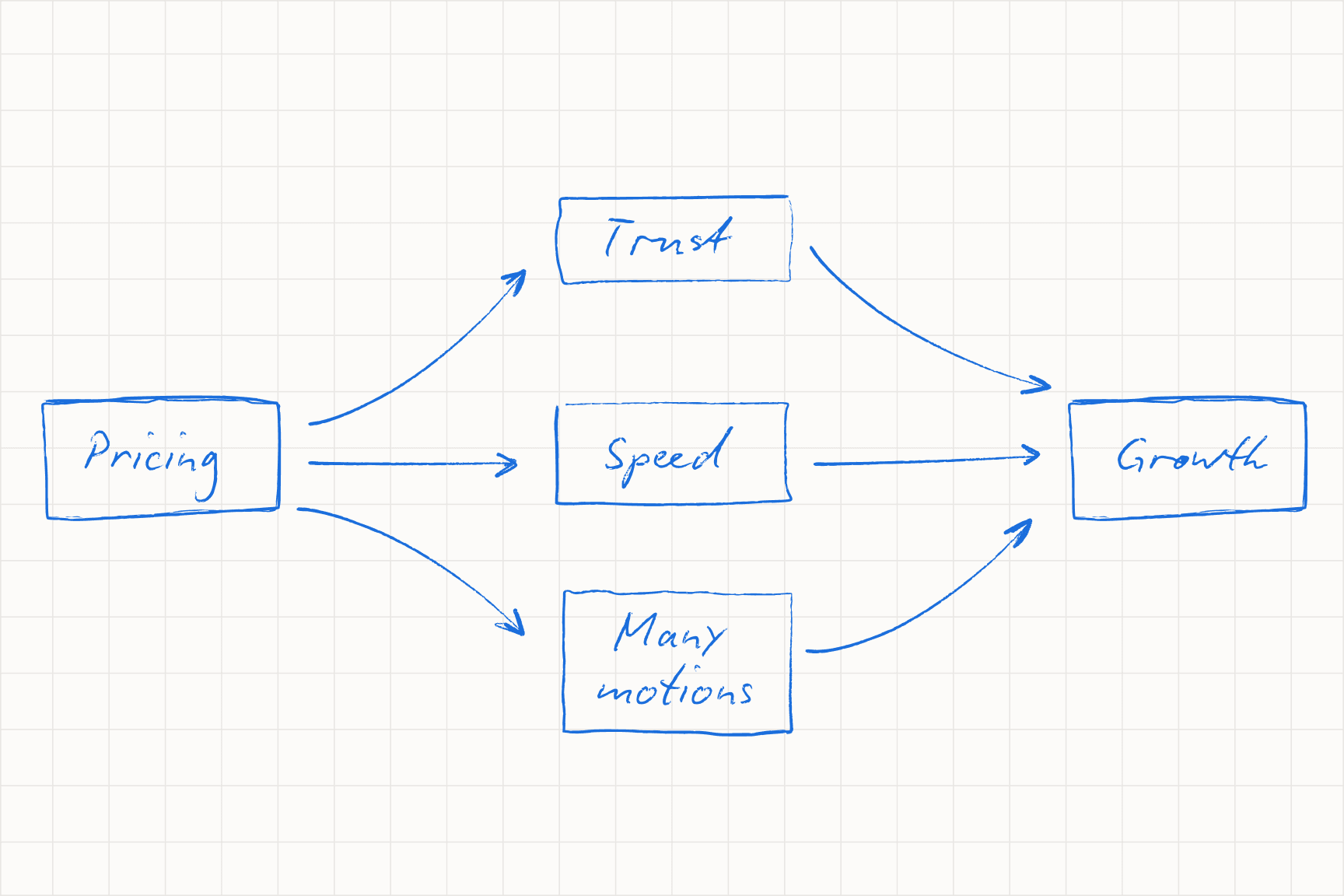
Get this right early, and you unlock real growth downstream:
- Build trust: Give customers instant usage visibility and proactive spend controls
- Ship faster: Launch new products and pricing experiments in a matter of days
- Support multiple motions: The same infrastructure powers PLG self-serve and enterprise sales-led deals
- Turn pricing into growth: Run experiments, optimize packaging, respond to market feedback quickly
The Stripe 5-step framework
At Stripe we built a framework around a lot of customer conversations we were having, where similar challenges kept coming up. The conversations used to be: “how do you do billing? How do you do subscriptions?” Then AI hit, and a flood of companies started asking the same question: how do we price this?
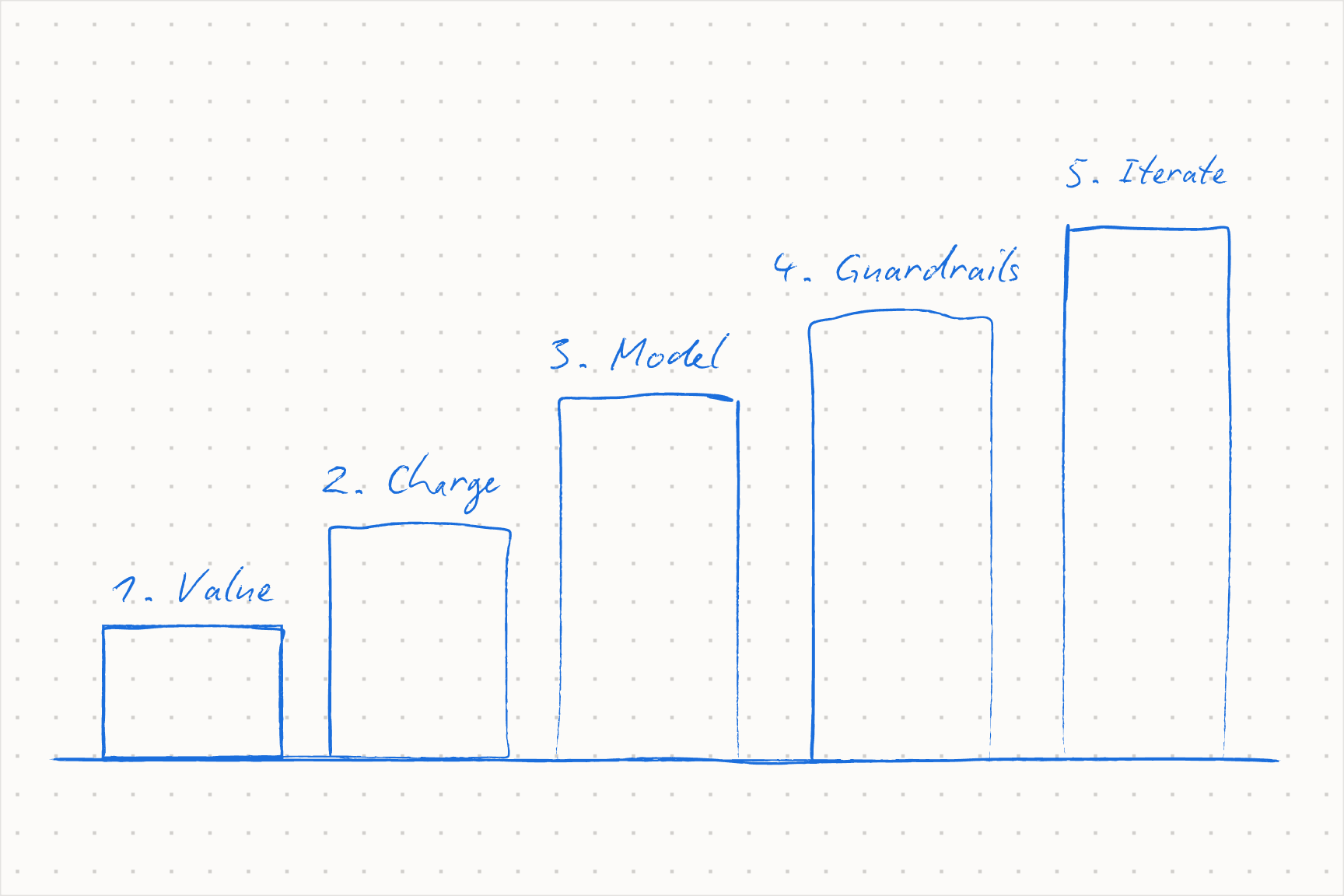
We use these 5 steps to pressure-test your business model against potential pricing:
- Value metric: what outcome do you actually deliver?
- Charge metric: what can you measure and bill on?
- Pricing model: subscription, usage, or hybrid
- Guardrails: limits, caps, overage rules
- Iterate: pricing is a product function, not set-and-forget
Lovable is a great example of this in practice. They grew to $200M ARR in their first year post-launch, starting with a standard seat-based subscription. But they saw that value was actually more closely aligned with what users were building: users built apps in bursts and collaborated across specific projects.
Lovable is a great example of this in practice. They grew to $200M ARR in their first year post-launch, starting with a standard seat-based subscription. But they saw that value was actually more closely aligned with what users were building: users built apps in bursts and collaborated across specific projects.
So they restructured: the team introduced a subscription model with monthly credits plus daily free credits, letting users spend credits based on the complexity of the prompts needed to build their apps. The new model eliminated the seat model entirely, giving teams a monthly allotment of credits alongside unlimited users, so teams can collaborate freely across products and pay for the value they’re actually getting. Plus, credit rollovers and add-ons mean customers can use credits during bursts of time, instead of the same amount each month.
The pricing model matched the way the product was being used. You need to be willing to explore this.
The infrastructure reality
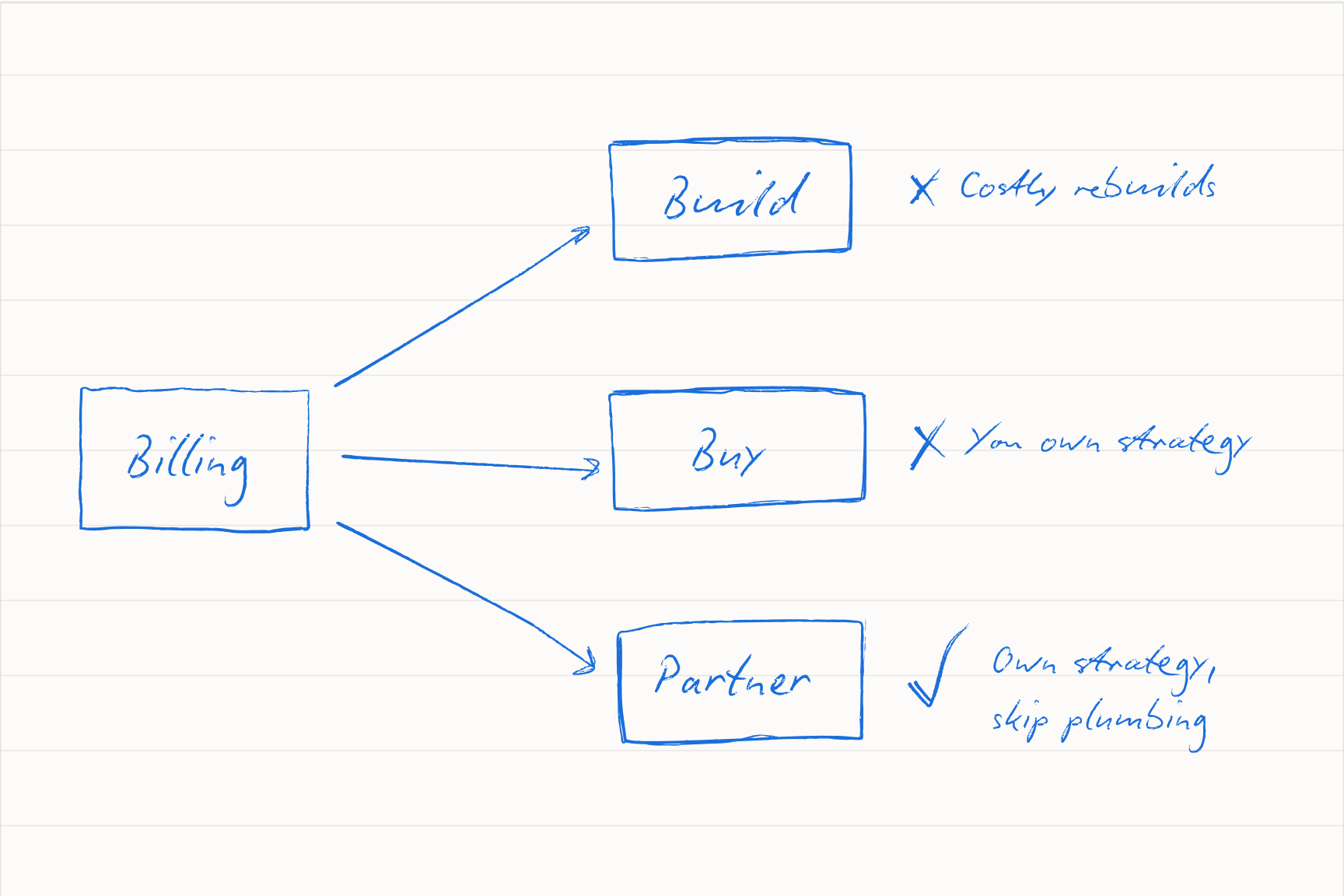
The build-versus-buy debate gets bandied about a lot. But building billing yourself costs more than founders expect, and the real cost isn’t the first build, it’s the rebuilds. Every pricing change you make needs to be fast to leave room for iteration and experimentation. And buying a solution doesn’t make the strategy problem disappear: the pricing model, the packaging, the customer relationship are yours to own regardless of what infrastructure sits underneath.
The companies getting this right have found a third path: building with an infrastructure partner that’s purpose-built to handle the complexity underneath, so they can focus their energy on the monetization strategy itself. We call this monetization infrastructure: the right tooling to give you the speed and flexibility to adjust pricing as product and market demands shift, along with all the revenue ops that comes with it.
For a sense of what this looks like when it’s working: ElevenLabs scaled to $500M ARR with just one engineer looking after subscription billing. Most teams building this themselves end up with a dedicated squad of engineers maintaining billing infrastructure that should have been compounding into their core product instead.
Your first price is a hypothesis: you should treat it like one, and build on infrastructure that lets you test it.
Ben Thirlwall
Head of Billing, EMEA at Stripe