Hire for slope, not for pedigree


Cristina Cordova is COO at Linear, leading go-to-market and operations. With a deep background in scaling tech companies, she previously served as Head of Platform & Partnerships at Notion, where she launched the API and built their global partner ecosystem. Cristina spent over seven years at Stripe as one of its first 30 employees, helping scale the company to 3,000 people. There, she built and led the partnerships organization and ran a cross-functional business unit building new financial services products. She has invested in and advised over 80 startups across AI, SaaS, and fintech.
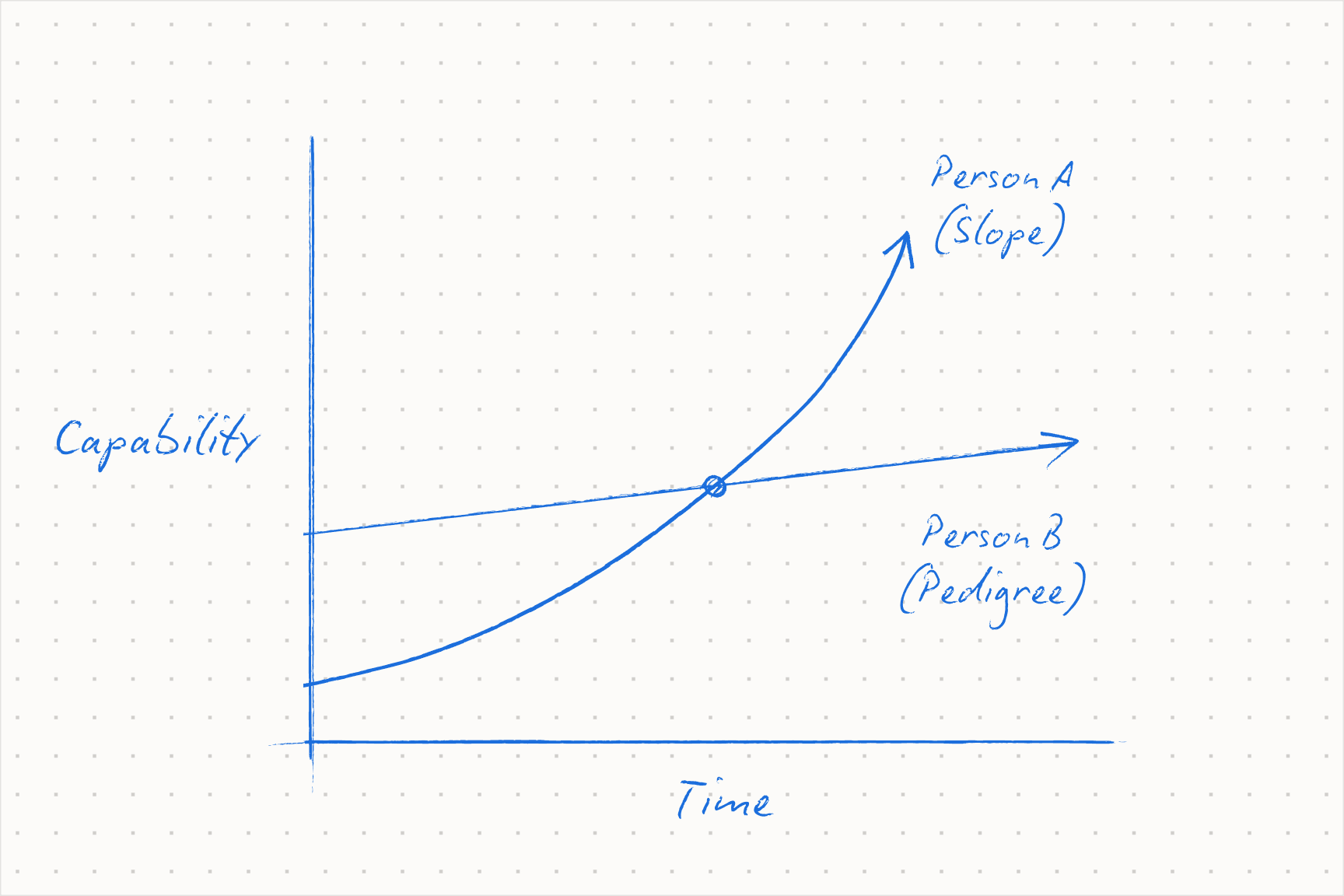
In GTM, the tools have changed, the playbooks have expired, and a name-brand company on a resume says little about what someone can do today. For Cristina, scaling a team today means looking for slope: how fast a person is learning and whether they are fluent in the tools that actually matter now.
Slope, not pedigree
The whole GTM org looks different today because the tools have changed how we work. Today, we can operationalize systems that enable us to scale to the next stage of growth with far fewer people. That’s really exciting to me.
At Dropbox, (a canonical PLG B2B company which early on had tens of thousands of signups a week) finding the accounts worth a salesperson’s time took a data science team, a growth team, and a sales team. At Linear, it’s one person with a playbook. What used to be a whole set of roles is now one person setting up a system, and the sales team stepping in where it makes sense.
So hiring the person who did growth at Dropbox ten years ago won’t necessarily get me the person who can do the job at Linear today. I’d rather hire someone with three years experience using the tools we actually use. What I care about is slope: what has this person learned recently, and how have they used it? People with a set way of doing things can get stuck in a playbook. I want the person who thinks in first principles, and is fluent in the tools their work depends on. That fluency tells me how fast they’re adapting to the world as it is, not the world as it was.
Generalist structure, specialist timing
I’ve always thought of myself as a generalist. I need to know a good amount about a lot of different things, to a level of depth where I can understand how they work.
I’ve always thought of myself as a generalist. I need to know a good amount about a lot of different things, to a level of depth where I can understand how they work.
I joined Linear when we had one marketer. At that time we had no customer stories. Well, I guess I’m writing a customer story then. Had I ever written one before? No. But I learned how to do it, and then I knew what to look for in the next person. Now I’ve hired someone who’s great at writing customer stories. He’s still a generalist, but he’s a better writer than I am. Finding a person who can take something to the next level is really important.
The right time to add a specialist is when you’ve hit that edge where a generalist’s depth doesn’t get you where the organization needs to be. We just hired someone to do events marketing specifically. They know which agencies to use, which venues, how to follow up, which tools. Specialists can be great, you just have to figure out the right timing to deploy them within a company of a lot of generalists, as we are.
Work trials calibrate, if you know what you’re measuring
I remember in the early days at Stripe, we’d talk about a candidate and say they’re super Stripey. But cultural shorthand quietly becomes a proxy for what we think good looks like, not what a candidate can actually do.
Aligning on what you’re actually looking for, as a team, is the most important part of the whole hiring process. For example, we’re looking for a growth marketer who really understands the potential of the new tools that are available to us. We’re not looking for an SEO expert. The rubric doesn’t have to be sophisticated. A lightweight one-to-four scale where everyone is scoring the same thing is already more useful than a gut check.
Work trials are a great way to build out this rubric and understand how someone works with the company. But the rubric only means something if the team has already agreed on what the numbers represent. Getting things done at one company is very different from getting things done at another. For instance, at Stripe you had to produce a five-page document before you could write your first line of code. At Linear, we don’t work that way. The work trial project should test for the thing you actually care about: does this person have the underlying skill set, and can they adapt to our way of working?
The other thing that helps enormously: run multiple trials at the same time when you can. I might think a candidate is fine, and I could hire them. Then someone else comes in and the first person pales in comparison. It’s hard to know what great is unless you have comparison points. The reverse is also true: someone great comes in, you think they’re pretty good, but you wonder if there’s better so you pass on them. It might turn out you had the great person right in front of you the whole time.
The first marketing hire
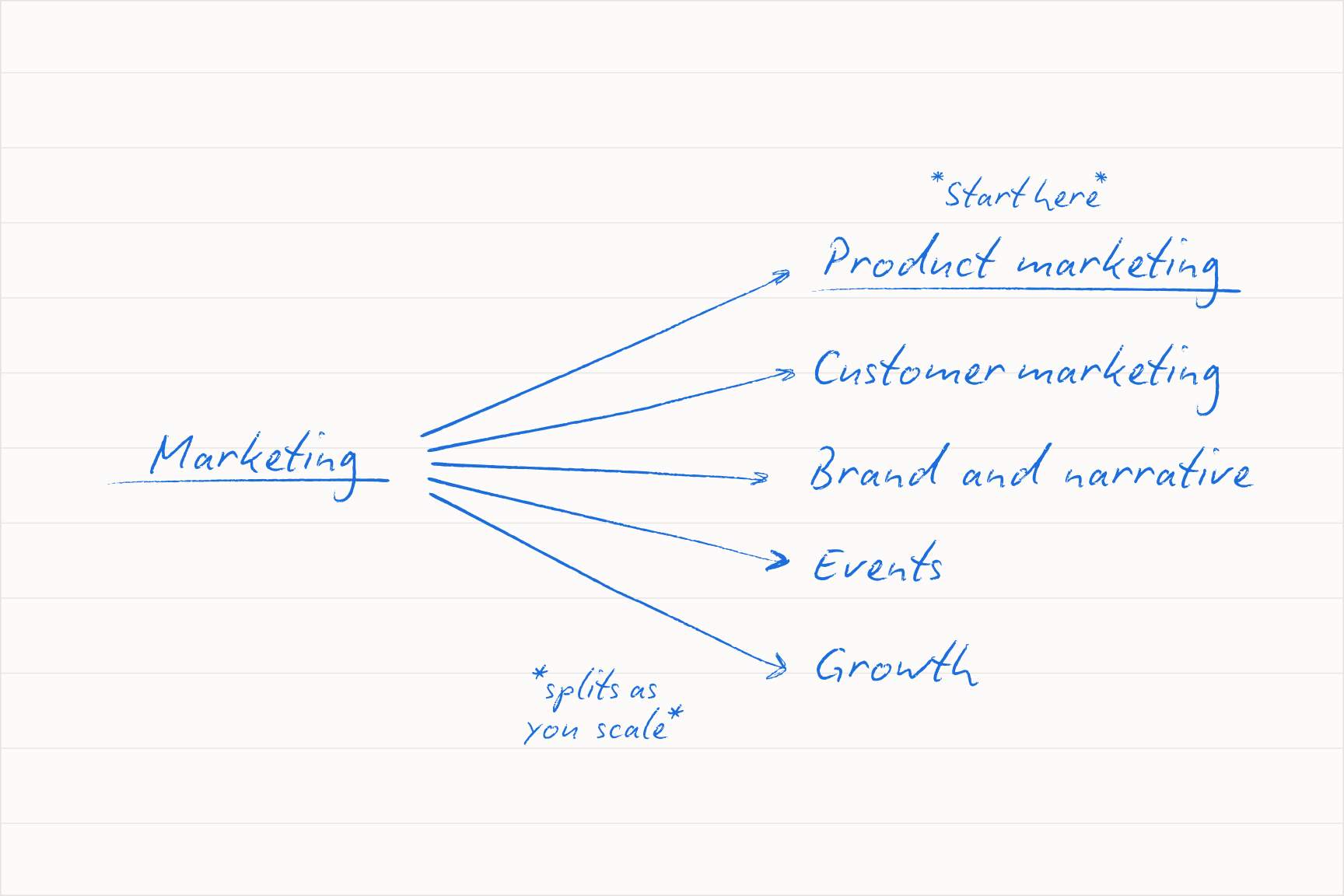
Marketing is seven different functions rolled into one, which is why it’s one of the hardest hires you’ll make, especially on a young or small team.
The foundation for an early stage GTM team is product marketing. You have a product, you need to describe it to people, and you want them to want to buy it. I’ve found AI to be genuinely terrible at this. You read most landing pages now and you can just tell it was written by AI. Use it as a thesaurus, use it to iterate on words, but your own understanding of what should be on the page has to come first.
The foundation for an early stage GTM team is product marketing. You have a product, you need to describe it to people, and you want them to want to buy it. I’ve found AI to be genuinely terrible at this. You read most landing pages now and you can just tell it was written by AI. Use it as a thesaurus, use it to iterate on words, but your own understanding of what should be on the page has to come first.
Beyond the words, the first marketer needs to be the person talking to customers and translating what they say back into the product and messaging: we thought features X and Y were most important, but it turns out it’s A and B, so we’re going to reorder the landing page to suit. And they have to do all of that while working with a founding team that has opinions about marketing (I’ve never met a founding team that doesn’t). Marketing is subjective, so you need someone who’s going to be very collaborative.
Once you have that person, the role will reveal how it should be split. You realize you need someone doing customer stories and sharing the customer voice full time. That’s customer marketing. You need someone for narrative work; that’s brand. You cut and slice down to component parts and search for more specific skill sets as you scale.
Set goals, then question them
As a business person in a product-led, engineering-led company, I’m probably the most metrics-driven person in the room. It comes down to your top-line goals. It might be ARR, or weekly active users, and how everyone is working toward them. ARR isn’t just the sales team’s responsibility, or marketing. It’s the product team’s too. If the product isn’t delivering, we don’t have a product to sell.
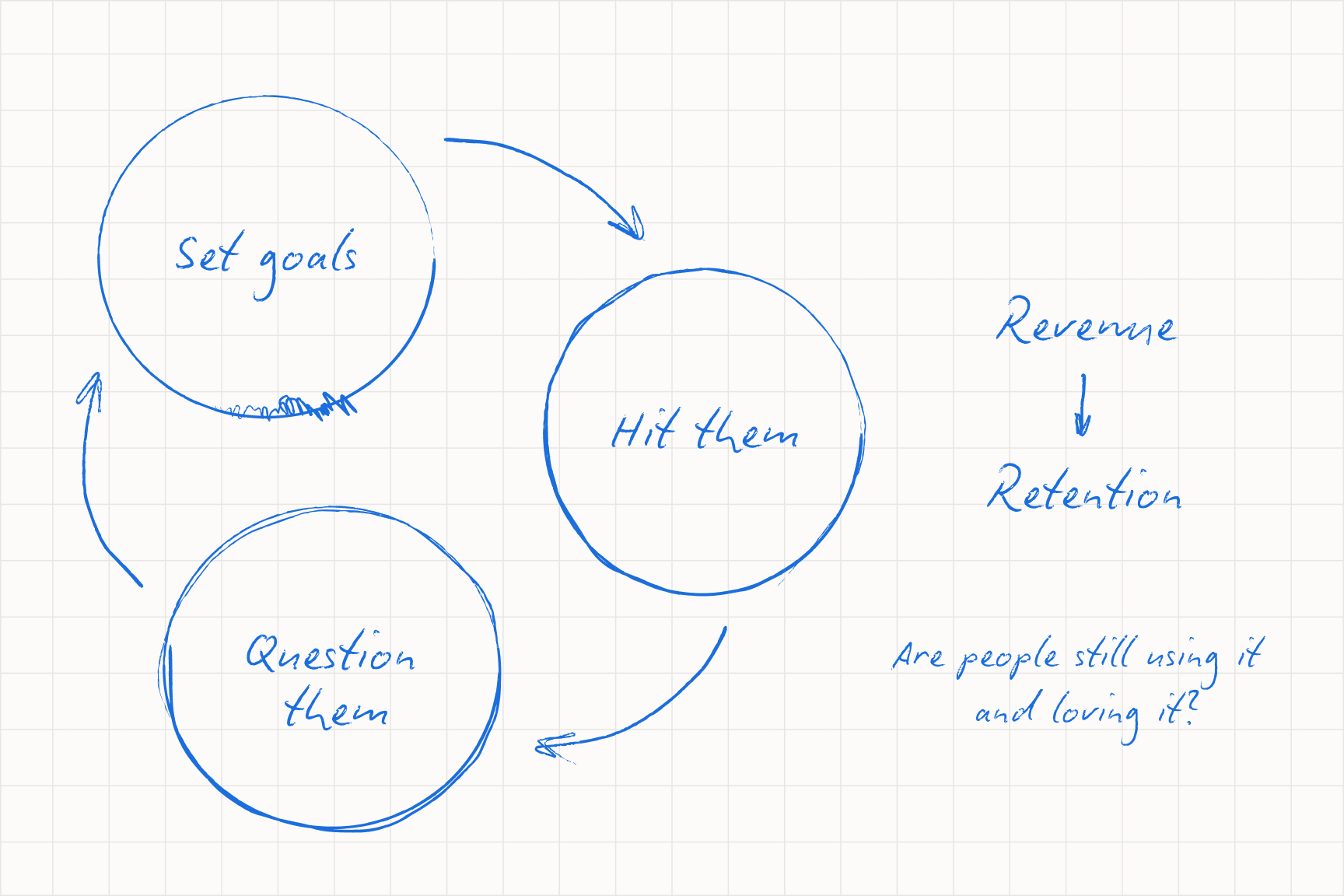
So success means setting your goals, hitting them, and then asking whether they were the right goals in the first place. Sometimes you build an incentive structure and realize you don’t actually care that much about revenue if people aren’t using the product, because plenty of people sign deals and never convert to really using it. So it’s not just revenue, it’s retention. Are people continuing to use the product, and continuing to love it?
I’ve always been at companies that listen to customers through anecdotes before they look at data, at least at the start, when you’re still working out whether you have product-market fit. One reason I love working with developers is that they’re discerning. They’ll tell you if they love or hate your product. Other buyers are cagier: they might tell you the product is interesting, but never use it that deeply.
I’ve always been at companies that listen to customers through anecdotes before they look at data, at least at the start, when you’re still working out whether you have product-market fit. One reason I love working with developers is that they’re discerning. They’ll tell you if they love or hate your product. Other buyers are cagier: they might tell you the product is interesting, but never use it that deeply.
You want a need-to-have product, not a nice-to-have product. You want the customer who tells you the truth. You know you’ve hit something good when you’ve spoken to 10, 100, 1000 people, and the customer love is visceral. We have people write into support just to say how much they love Linear. That has to come first, and then you can figure out: how do we monetize this? How do we scale it?
None of this needs charts or sticky notes or some mind-boggling framework. People think simply, and no one can effectively hold more than a handful of goals in their head at once. An AE is thinking about their quota. Marketing is thinking about sign-ups. My job as a leader is the vision, and then unblocking the team so they can reach it. Everyone else carries their handful. Leadership has to see how they all add up to the vision you’re trying to achieve.
Cristina Cordova
COO at Linear