The rise of the renaissance CSM
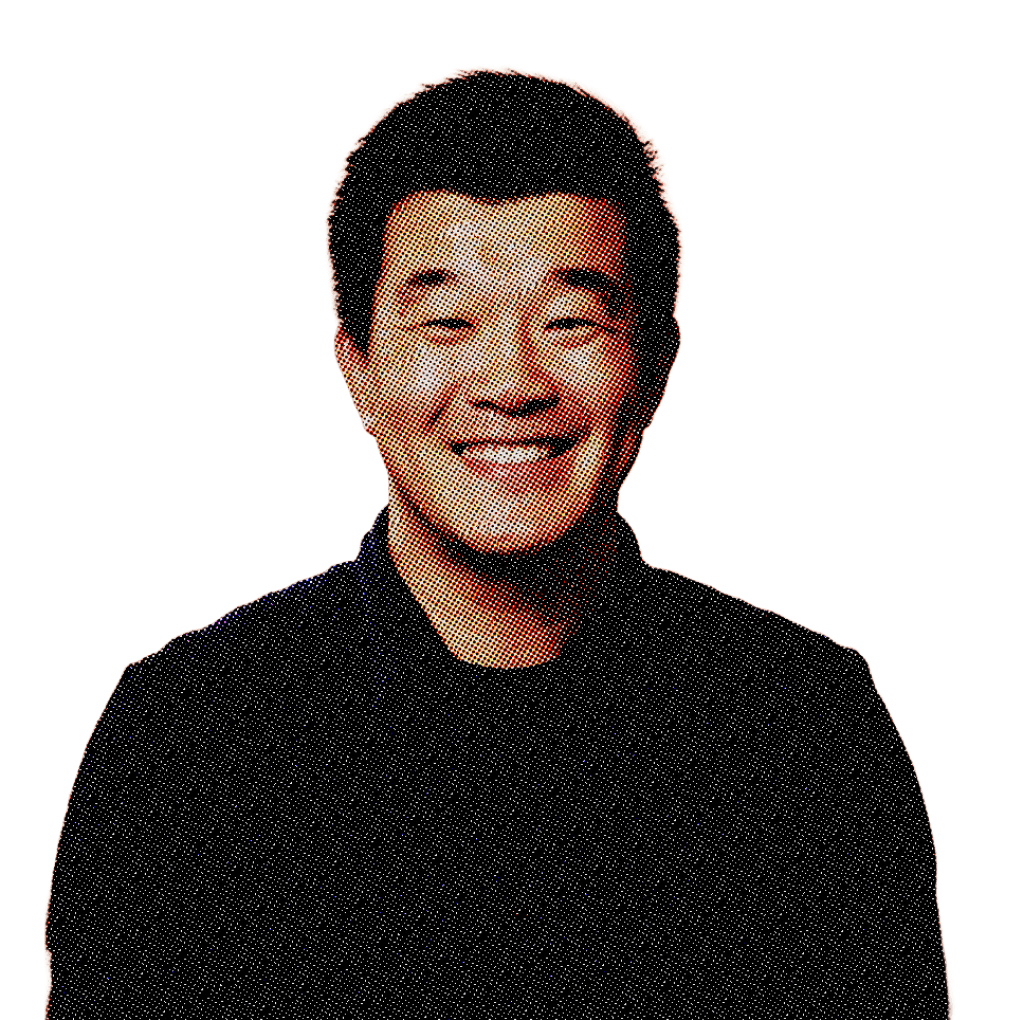
Bo Sun is Global Head of Customer Success at Notion, the widely-used product-led-growth company that has transformed into an AI productivity platform. Before joining Notion, he led customer success for LinkedIn’s $1B+ Sales Solutions business and focused on growth strategy as a consultant at BCG.
Retention used to be a contract event you defended at renewal, and expansion came later as a separate motion. In this entry, Bo describes how AI collapsed both into a single, continuous job. We’ve entered what Bo calls the age of the renaissance CSM: a CSM who is technical, commercial, and strategic, all at once. Customer success is now the growth engine of a company.
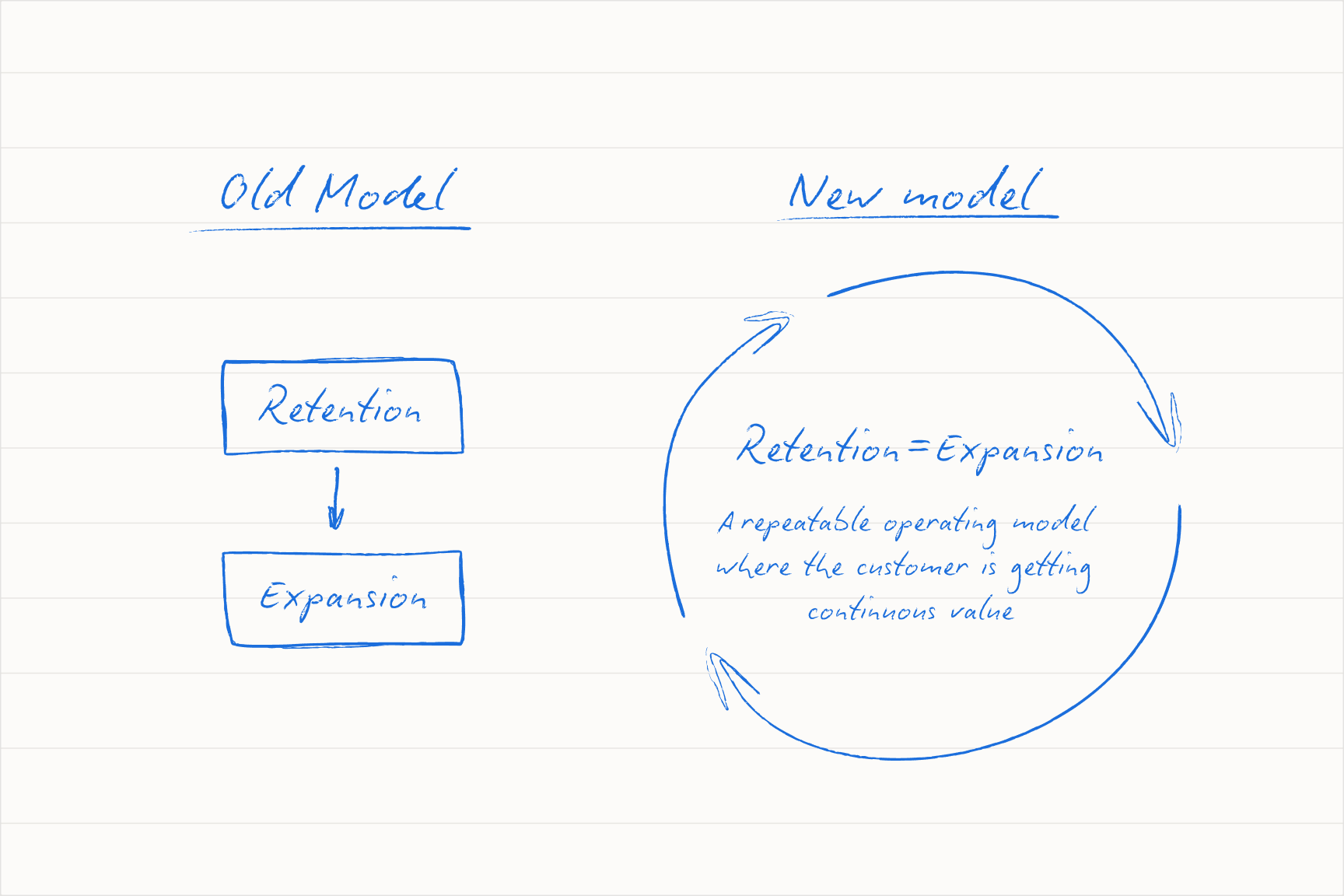
The line between retention and expansion has collapsed
Retention used to be a contract event. Something you showed up to, hopefully got done, or in some cases defended. Now, we have to think of every deal, every renewal, as a measurement of whether we’re building a repeatable operating model for the customer in which they’re getting value.
When that operating model is there, retention shifts easily into expansion. It goes from “I’m getting a ton of value” to other teams knocking on your door saying “I want that value, too.” When it’s not there, when you’re not deeply embedded in your customers’ workflows, you get the opposite effect: a failure to launch.
AI has compressed the gap between your product being an experiment and it becoming a system which drives real value. Expansion isn’t a separate motion anymore. It’s the consequence of customers seeing repeatable value. That’s why CSMs need to be more commercial. They’re guiding the customer to value, in some cases literally helping the customer build it, as well as carrying the renewal and expansion.
AI has compressed the gap between your product being an experiment and it becoming a system which drives real value. Expansion isn’t a separate motion anymore. It’s the consequence of customers seeing repeatable value. That’s why CSMs need to be more commercial. They’re guiding the customer to value, in some cases literally helping the customer build it, as well as carrying the renewal and expansion.
Forward deployed strategic consultants
At Notion, the CS job used to be: we support the customer during onboarding, train end users, help folks find relevant resources, respond to questions, drive monthly active user adoption, and lead with seat utilization and activity to articulate customer value.
Today, we’re helping users understand the workflows that make the most sense for them. In practice, they are distinct teams: FDE and CS. FDEs handle complex, custom-engineered builds that are typically build-for. CSMs operate in a build-beside motion, empowering our customers to create AI-driven workflows that create durable value.
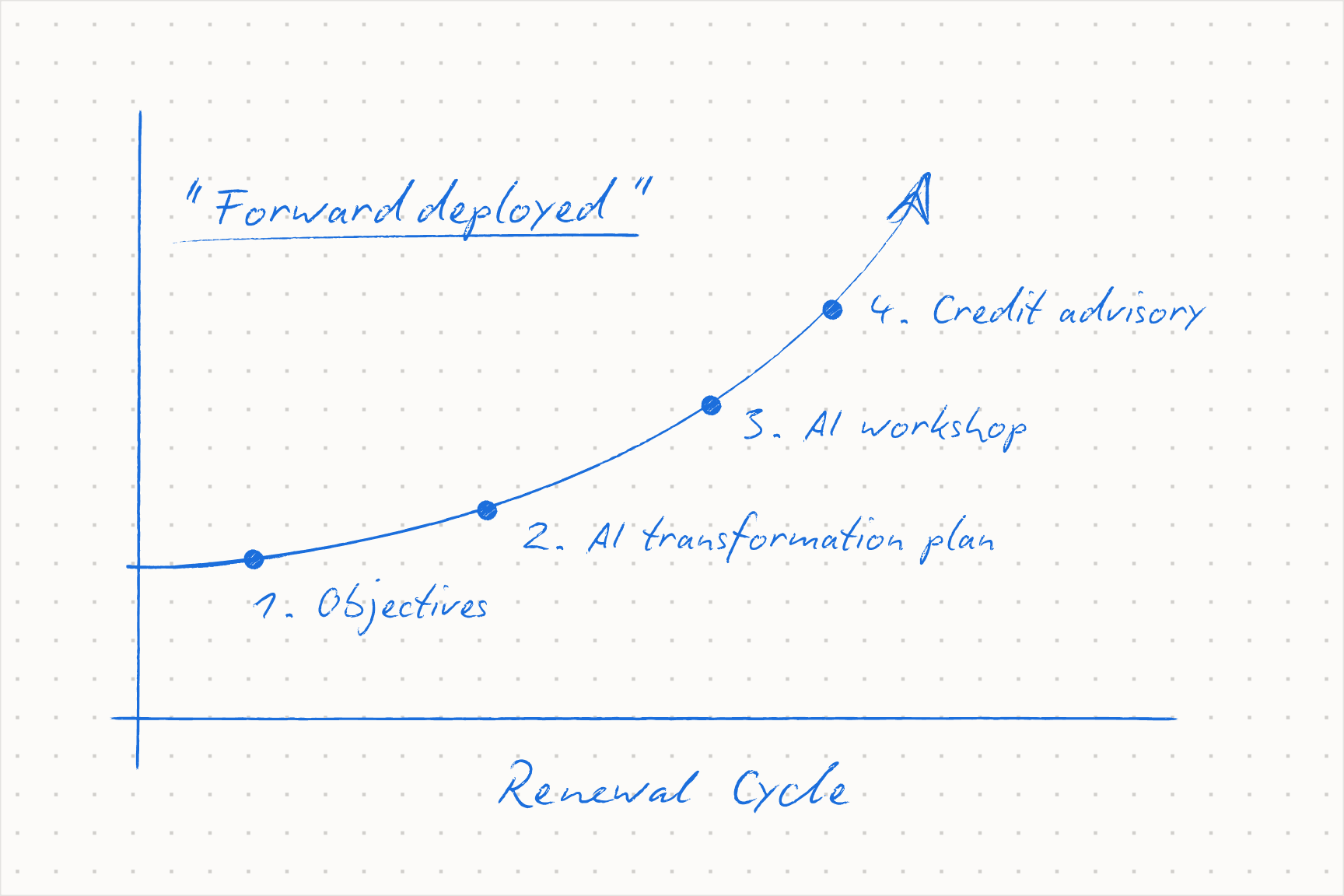
Very early in the renewal cycle, we run four key steps:
- Get an understanding of the customer’s business objectives.
- Co-build the AI transformation plan: based on those objectives, the specific workflows we can add value for on day one.
- Run an AI workshop, leaving the room within an hour and a half with multiple workflows that can be put into place immediately.
- Over time, partner with them as an advisor on credit sizing and trade-offs: which workflows are most valuable, how to think about the credits they’re utilizing versus the value they’re getting.
That’s the element of being “forward deployed” to build beside our customers: we’re no longer just talking about value, we’re helping them craft workflows: thinking through the people involved, the controls, governance, how they can measure impact. Customers leave the workshop with actual workflows operating. When we work this way, the renewal itself almost becomes a non-event, as we’re keeping business outcomes and ROI at the center of everything we do.
That’s the element of being “forward deployed” to build beside our customers: we’re no longer just talking about value, we’re helping them craft workflows: thinking through the people involved, the controls, governance, how they can measure impact. Customers leave the workshop with actual workflows operating. When we work this way, the renewal itself almost becomes a non-event, as we’re keeping business outcomes and ROI at the center of everything we do.
To be frank, when we first started, we weren’t sure our CSMs could become technical enough to get in a room with senior engineering leadership and have the technical chops to design custom agents. But now, these executive AI Agent Workshops have become our core operating motion.
Teach them to fish
We want this motion to run at scale, so our CS org has three segments.
- Dedicated CSMs: work one-to-one with a small book.
- Scaled: one-to-many, but still has a human who can help.
- Digital: completely non-human touch (in-app nudges, automated touchpoints, etc).
We execute the transformation plan for both dedicated and scaled. Based on signals from usage and adoption, we allocate CSMs to assist. Notion AI actually unlocks a lot of time savings here — we’re able to use Notion AI to generate the AI Transformation Plan and give the CSMs a running start.
At the same time, we’ve created a lot of on-demand resources for our customers. We had one webinar with a customer with almost 358 attendees, hosted by just one person on our digital CS team. That company became one of our largest custom agent users because of the takeaways from that session.
If you’re an early team, don’t boil the ocean — especially with Enterprise AI Products, customers need to see real business value in order to defend the renewal. Focus on identifying workflows that can be embedded in your product — even with a small subset of users. Once you have that workflow, it’ll create a flywheel effect because those teams will share wins to the rest of their business and drive adoption for you.
If you’re an early team, don’t boil the ocean — especially with Enterprise AI Products, customers need to see real business value in order to defend the renewal. Focus on identifying workflows that can be embedded in your product — even with a small subset of users. Once you have that workflow, it’ll create a flywheel effect because those teams will share wins to the rest of their business and drive adoption for you.
As a word of caution: be mindful of building a system that empowers your customers to succeed without you. You want to teach your customers to fish. For early teams, the ability to scale that way means you’re not overly dependent on the FDE. This includes your digital customer success programs that provide 1:many resources and, for high-touch motions, a CSM that is focused on empowering the customer to build their own workflows and learn how to get help when they need it. Then you strategically apply the FDE touch where it makes sense.
Communicate value in the right terms
At Notion, our gold standard is communicating value to customers in their own terms. We try to avoid relying on things like active users or AI usage. If their objective is to reduce product ship time by 30%, we’ll use that. If it’s to streamline onboarding so it’s 30% easier for every customer, we’ll use that.
At Notion, our gold standard is communicating value to customers in their own terms. We try to avoid relying on things like active users or AI usage. If their objective is to reduce product ship time by 30%, we’ll use that. If it’s to streamline onboarding so it’s 30% easier for every customer, we’ll use that.
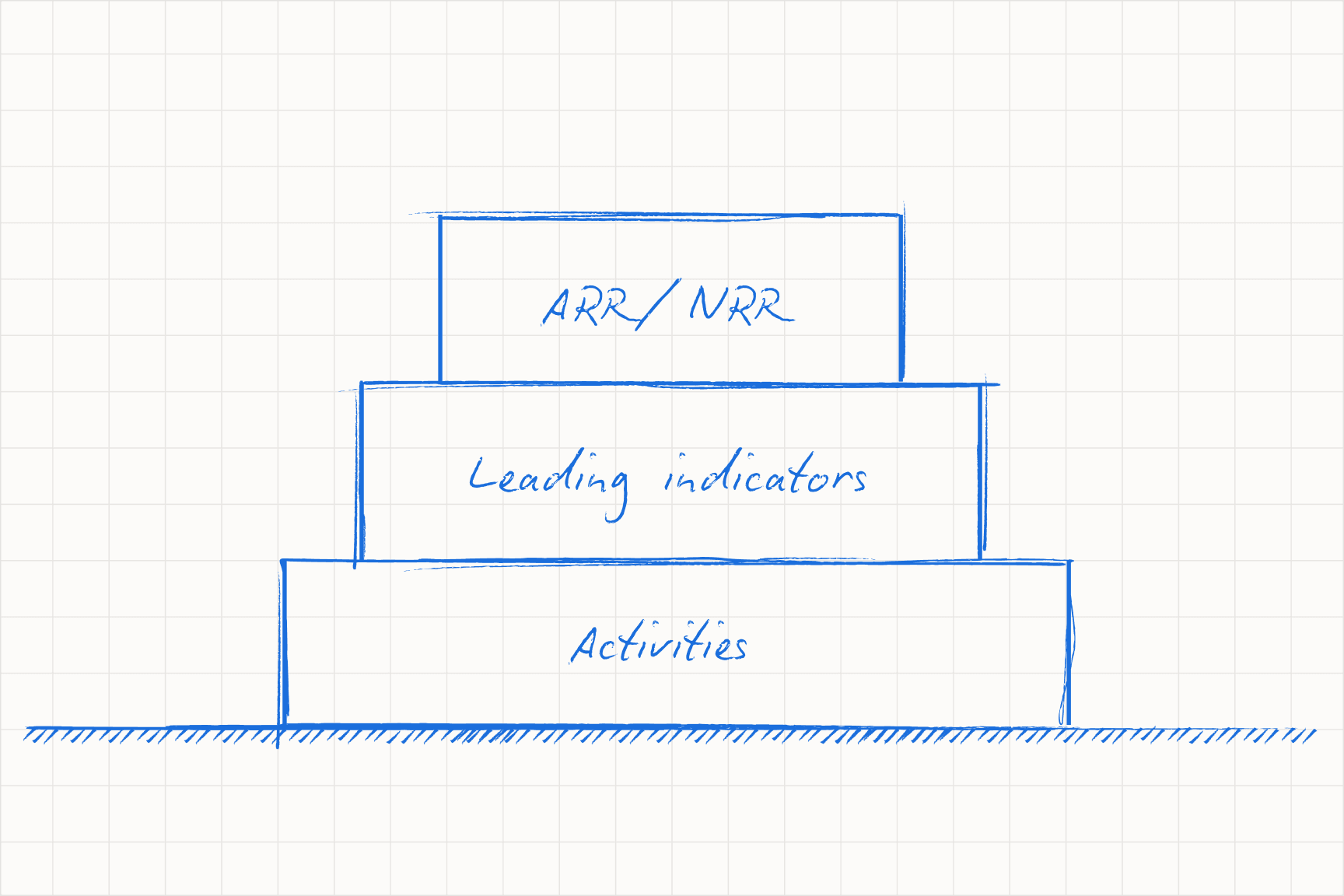
For our own team’s performance, we use three layers of metrics.
- ARR and NRR.
- Leading indicators: customer AI usage, the percentage of customers using AI weekly, active users.
- Activities we believe CSMs should be doing to drive value: transformation plans, AI workshops, AI value reviews.
When I first joined Notion, we were very focused on an adoption metric: monthly active user. Now we’re tied to a top-line outcome, ARR and NRR, and we’ve defined the set of key activities we believe will drive those outcomes.
The reason we now hold all three layers is that “NRR isn’t where we want it, go increase it” is not a directive. The layers give you somewhere to look. If leading indicators are strong but the top line isn’t, we multi-thread and find other pockets in the customer. If leading indicators are weak, the operating model isn’t sticking, and we need to revisit objectives and rethink workflows.
CS is your growth engine
We are entering the age of the super expert. The CSM function used to have multiple types: a technical, commercial, and enablement-focused CSM. Now you have to be all of them.
In the age of AI GTM, folks can be more ambitious with their expectations of CS. In the past, even when CSMs owned renewal, the function was seen as a support function. Now, CSM is capable of being the growth engine of the company.
CSMs are in it with their customers every single day. We have an obligation to distill the signal from the noise, work alongside product and marketing to build the things our customers want, and help them be aware of it. It feels like we ship something every week at Notion, and that’s a lot for our customers to keep up. It’s a lot for us to keep up. That’s the value flywheel I think we can now be a part of.
Bo Sun
Global Head of CS at Notion