Your product is the pitch


Elena Verna has led growth at some of the most successful PLG companies of the last decade, including Miro and SurveyMonkey. She’s now Head of Growth at Lovable, the AI-native app builder that went from zero to tens of millions in ARR faster than almost any company before it.
In this entry, Elena explains how AI has inverted the growth playbook. The companies winning today are giving the most away (product, access, experience) before asking for anything in return. Now, treating freemium as a marketing budget line, not a cost to minimize, is the single biggest unlock for early-stage teams trying to build a capture engine without paid spend.
Give your product away
PLG is seeing a resurgence right now because AI is compressing activation. The steps that used to require a whole UI to execute — the friction points, the discovery moments, the hand-holding — an agent can now do a lot of that work. There’s just a prompt box.
So the biggest push right now is that you have to give a lot of your product away upfront. Even your decision makers, CISOs, CTOs, are down there figuring out which platforms to use. If you’re not offering them a way to engage with it, whether that’s freemium or some form of self-serve, you’ve already lost them. Just selling the headline, the value prop message, a brand campaign, it’s not enough. People need to feel it. People need to see it.
Here’s the thing though: in the AI era, everything that you try is a lot more expensive. Traditional SaaS had margins where giving someone a trial cost you almost nothing. That’s no longer true. So you have to think about your product costs as a marketing center. You need to look at product usage as a marketing expense, not as a cost optimization tactic to squeeze down. Stop trying to minimize the freemium. Start treating it as the line item that replaces your Google and Meta spend.
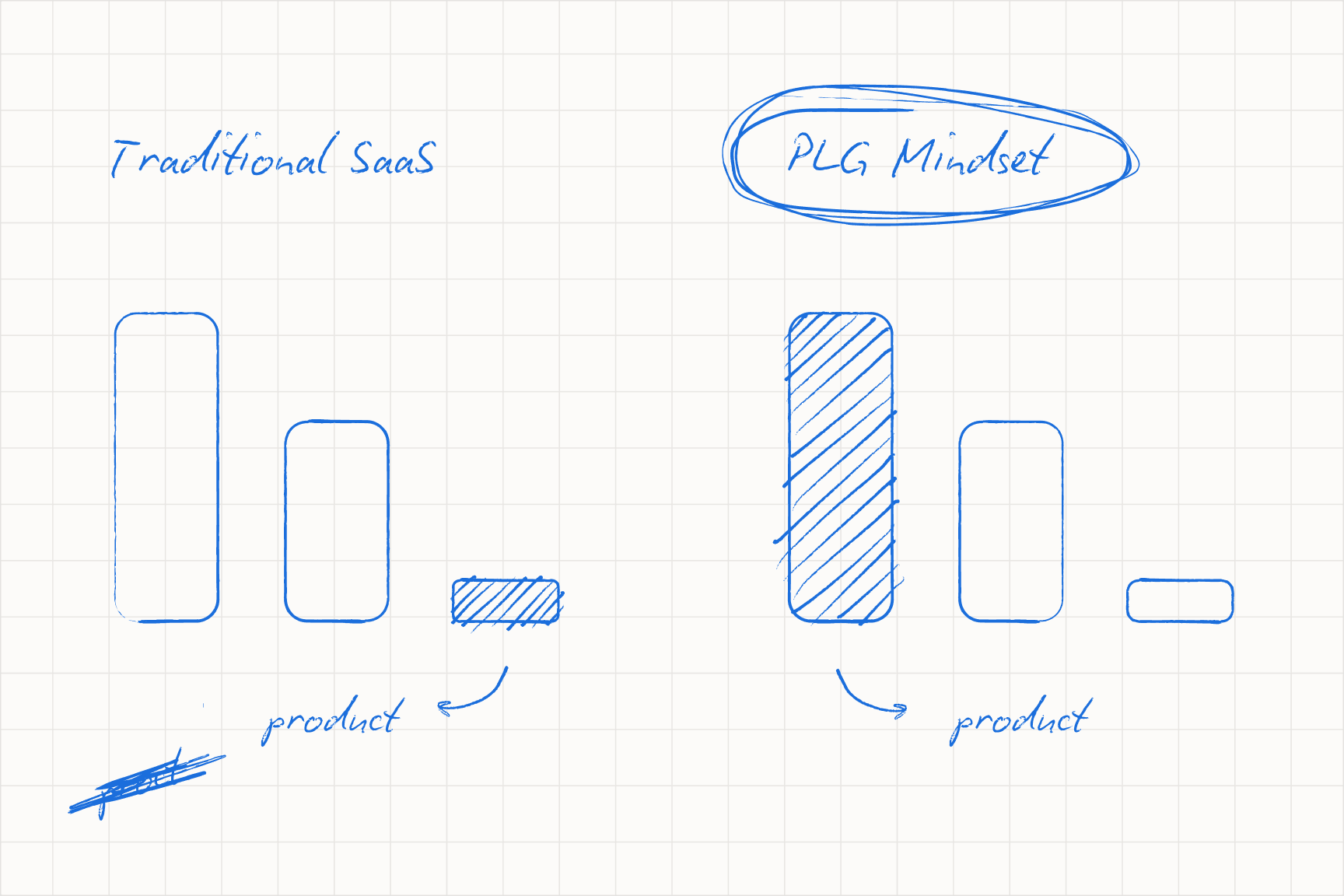
That’s how we think about it at Lovable. We treat our freemium cost as a marketing budget line, not a cost center. We give away millions of dollars of our own software every year. If anyone wants to host a hackathon, at their school, their company, their book club, we give the product away for free with no requirements. It’s the best acquisition channel we have by a significant margin, compared to any paid spend we possibly do.
Your product is your lead generator. The lead gen gate is not a form: it’s the experience of having that product already in people’s hands. You have to lead with product.
Your product is your lead generator. The lead gen gate is not a form: it’s the experience of having that product already in people’s hands. You have to lead with product.
Satellite apps are your new lead magnets
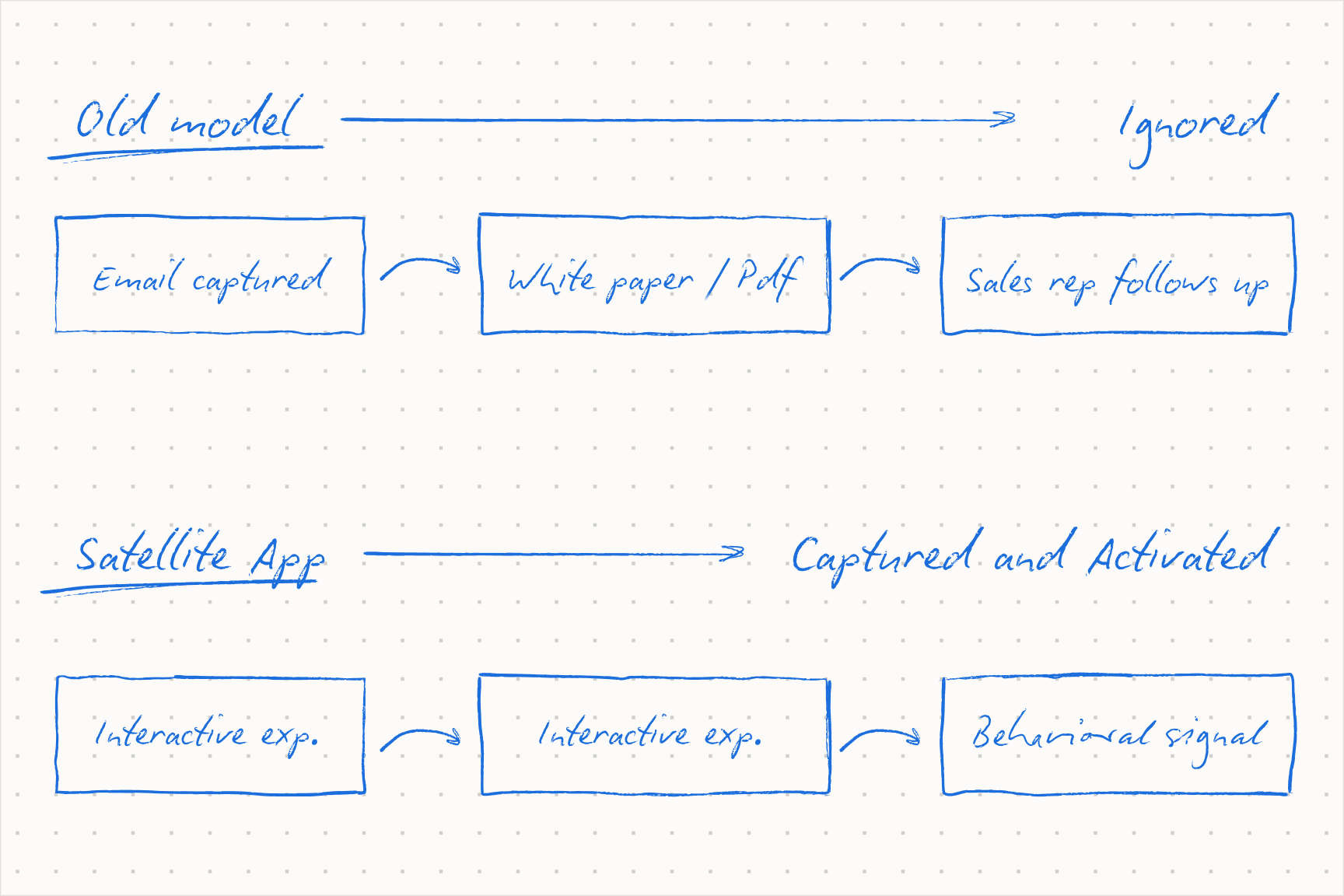
Something has shifted in how buyers behave, and most lead capture playbooks haven’t caught up with it. For years, the playbook looked the same: create a white paper, gate it behind a form, wait for the sales rep to follow up. That behavioral signal, someone trading their email for a PDF, was considered meaningful. It isn’t anymore. People are tired of giving their information to read a document. The flat delivery of content, even really good content, is less and less accepted as something that captures attention.
What I’m seeing a huge rise in is what I call satellite apps. An actual app experience that’s clickable, engaging, with a real back-end component. Something a prospect can interact with, enter their own information into, and actually do something with. It puts marketing firmly in an engineering position: you need to build this experience, not just design it. But when you do, you can stand out in a way that flat content delivery never could.
Build in public
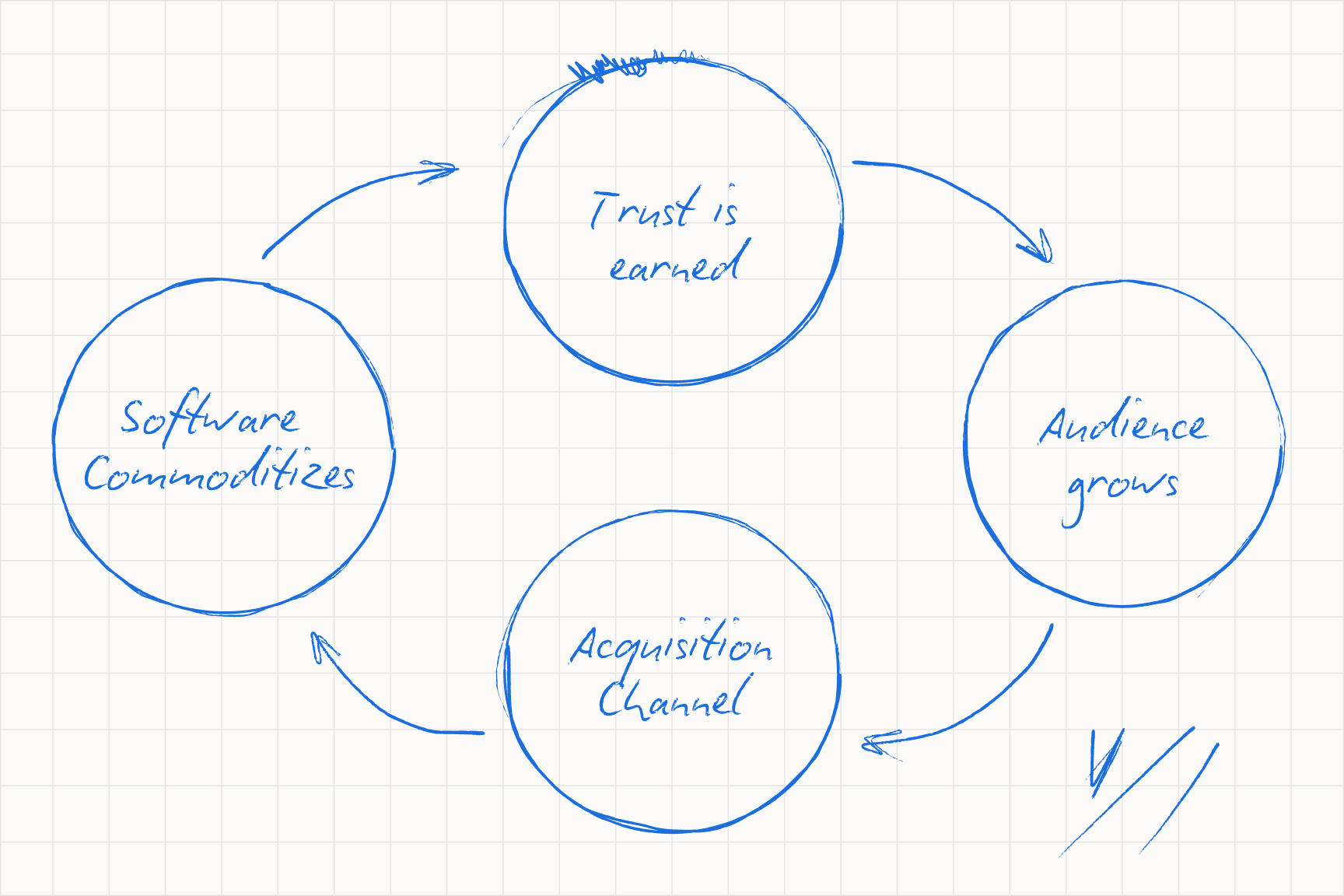
Trust in the AI era is earned by giving people an honest overview of what’s actually happening inside your company. Before, you could hide behind the product because it was differentiated. Now that software is becoming a commoditized layer, what differentiates you is the team building it.
Trust in the AI era is earned by giving people an honest overview of what’s actually happening inside your company. Before, you could hide behind the product because it was differentiated. Now that software is becoming a commoditized layer, what differentiates you is the team building it.
The reason Lovable was successful in its first three months, as it was getting to its first couple million in ARR, was because our CEO was very public across all social channels: provocative, open about what was working and what wasn’t, transparent about who was joining the team. Your social brand is one of the strongest acquisition channels you can invest in. Bringing in early hires willing to build in public is almost a resume requirement now.
The Lovable Score
Every product interaction has to carry that same energy. Our brand is not a marketing job. It’s a product job. Every single touchpoint with the product should feel like us: our voice, our personality, easy to use, delightful, surprising.
Every product interaction has to carry that same energy. Our brand is not a marketing job. It’s a product job. Every single touchpoint with the product should feel like us: our voice, our personality, easy to use, delightful, surprising.
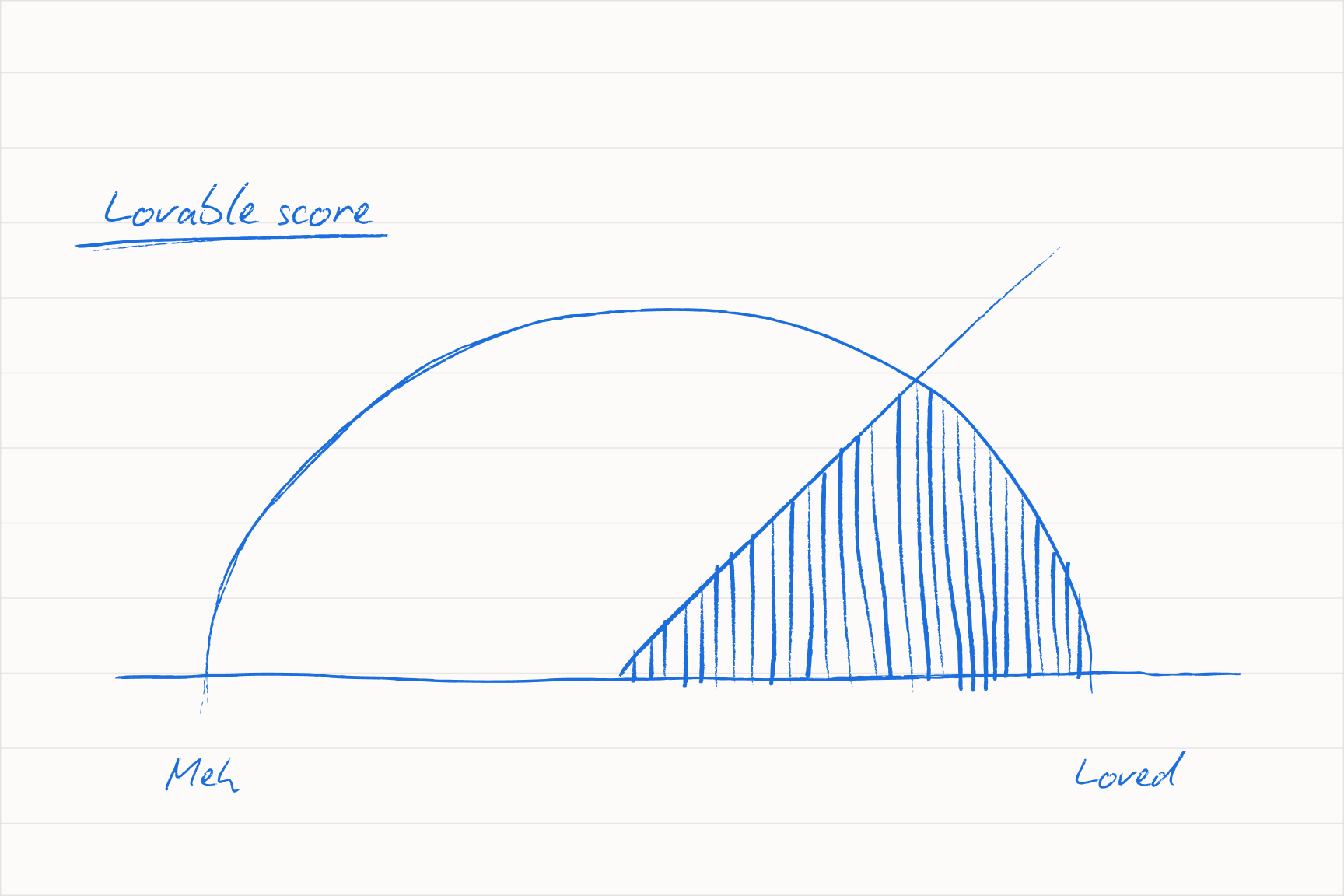
That’s what we measure with the Lovable Score: do you want to refer the product? How easy was it to use? How devastated would you be if it went away, which is the Sean Ellis PMF question, and how satisfied were you with what you accomplished? Those are our markers for whether the product has earned genuine connection, whether it has entered someone’s core workflow and cannot be replaced.
Know who you're building for
ICP still matters, but the problem statement has to come first. Articulate it in your customer’s words, understand who is feeling that problem, and define the specific jobs they need done. Then go a level deeper that most teams skip: frequency of use. It’s really dangerous to prioritize monthly-frequency use cases early on, because you end up with a product that constantly needs to reacquire customers who’ve forgotten you exist.
ICP still matters, but the problem statement has to come first. Articulate it in your customer’s words, understand who is feeling that problem, and define the specific jobs they need done. Then go a level deeper that most teams skip: frequency of use. It’s really dangerous to prioritize monthly-frequency use cases early on, because you end up with a product that constantly needs to reacquire customers who’ve forgotten you exist.
But just focusing on ICP can be dangerous right now, because ICP can drift. You need to reserve a percentage of your marketing and product roadmap for exploring new personas, new use cases that can be unlocked. The market is evolving fast. You start a company and you immediately need an innovation department within it, not in five years, from day one.
And there’s a dimension nobody is fully accounting for yet: AI agents are becoming part of your ICP. The hypothesis, and I think it’s more than a hypothesis, is that agents are going to come in and use your product. Most B2B software is evolving to be consumed by machines, not humans. Humans will own the agent interface, the agent will perform the tasks. Your future ICP profile includes the machines.
Elena Verna
Head of Growth at Lovable