Let AI own, not assist


Rati Zvirawa is the Senior Director of Product at Intercom, and leads product in the AI group at Intercom and the team behind Fin: the Customer Agent that started in support and now runs end-to-end conversations for sales teams too.
Rati makes the case that AI shouldn’t sit inside your sales motion, it should own full parts of it. An Agent runs on three things; playbook, knowledge, and data, and when you put it at the top of the funnel, the old metrics break for the right reasons.
AI owns, it doesn't just assist
In 2026, the buyer has changed. The seller hasn’t. Prospects arrive with more context of what you’re selling — they’ve done the research, compared you to competitors, they have high intent and deeper questions. The moment they try to start a real interaction, they hit the traditional inbound experience. Contact form. Chatbot. Queue.
In 2026, the buyer has changed. The seller hasn’t. Prospects arrive with more context of what you’re selling — they’ve done the research, compared you to competitors, they have high intent and deeper questions. The moment they try to start a real interaction, they hit the traditional inbound experience. Contact form. Chatbot. Queue.
The first thing most teams do with AI is close that gap by accelerating what they already have. Co-pilots to make the sales team, as it is today, faster. That’s one side of the coin. The other side is asking what whole parts of the conversation an Agent can own outright — first message through to paid customer — and how the human roles get redrawn around it. The first path gets you a web team and a sales team, each slightly more efficient. The second is a transformation. Not assist, not augment. Own.
Take the first path and what you end up with is a collection of small Agents bolted onto different parts of the funnel. You haven’t transformed anything. You’ve just added tooling.
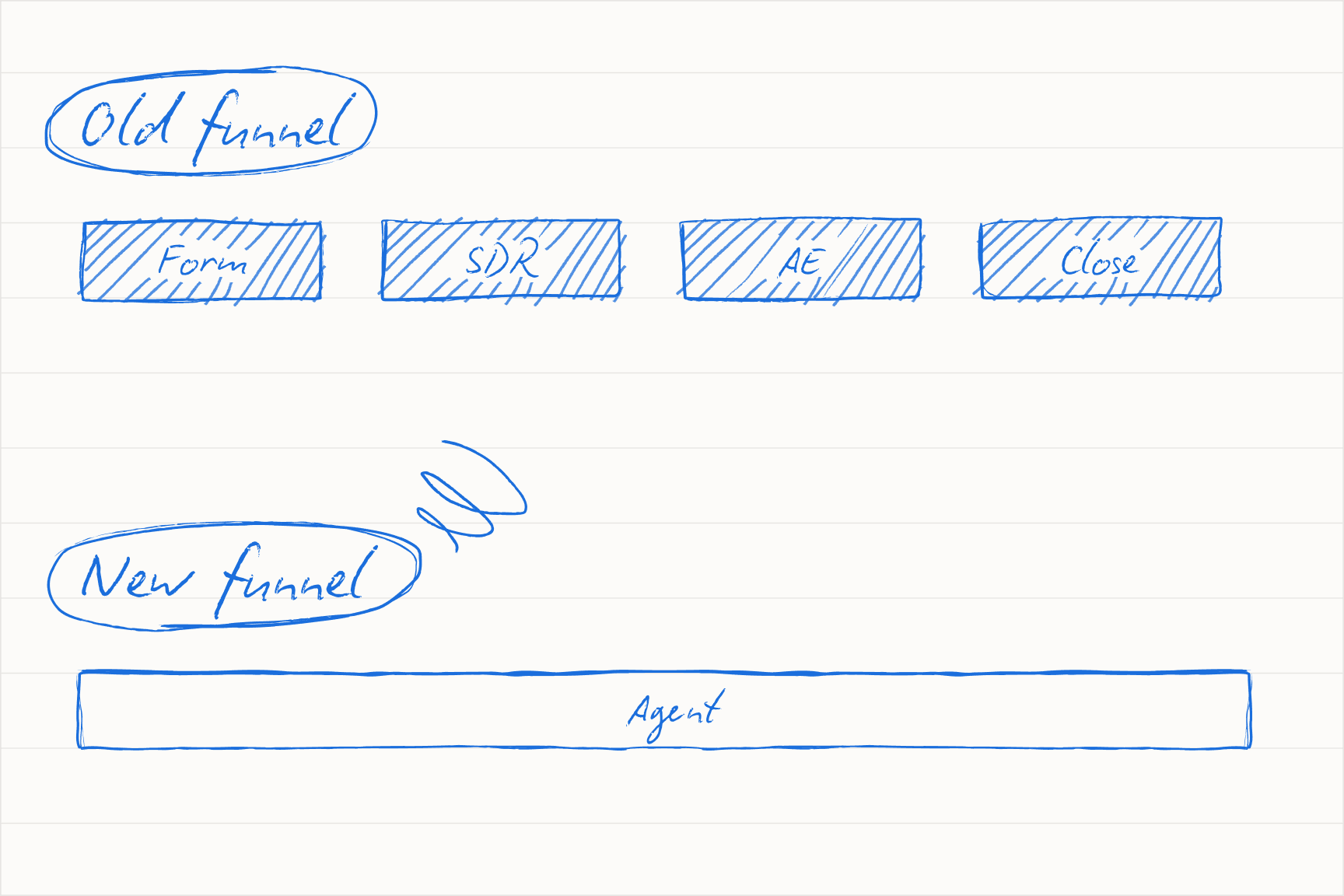
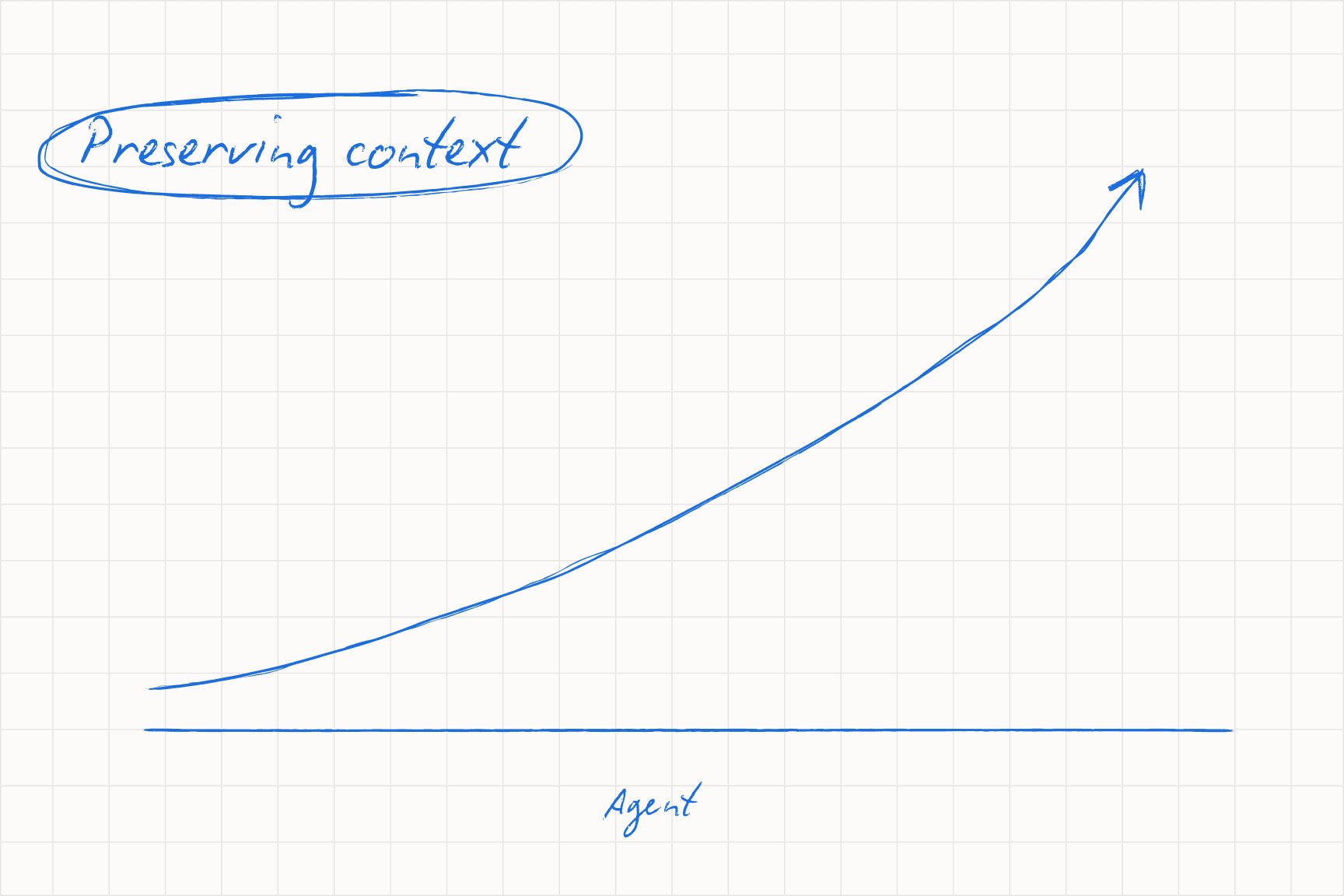
Handovers rebuild relationships, agents preserve them
Here’s the thing most teams miss. No matter how much context you hand over from one person to the next, there’s something inherent in that handover where the relationship has to be rebuilt. The context may transfer. The relationship doesn’t.
When an Agent is continuing the conversation instead of handing it off, there’s no rebuild. The relationship is maintained. The customer is served throughout. The handover, when it does happen, only happens at the moment it’s most impactful for the customer and the business.
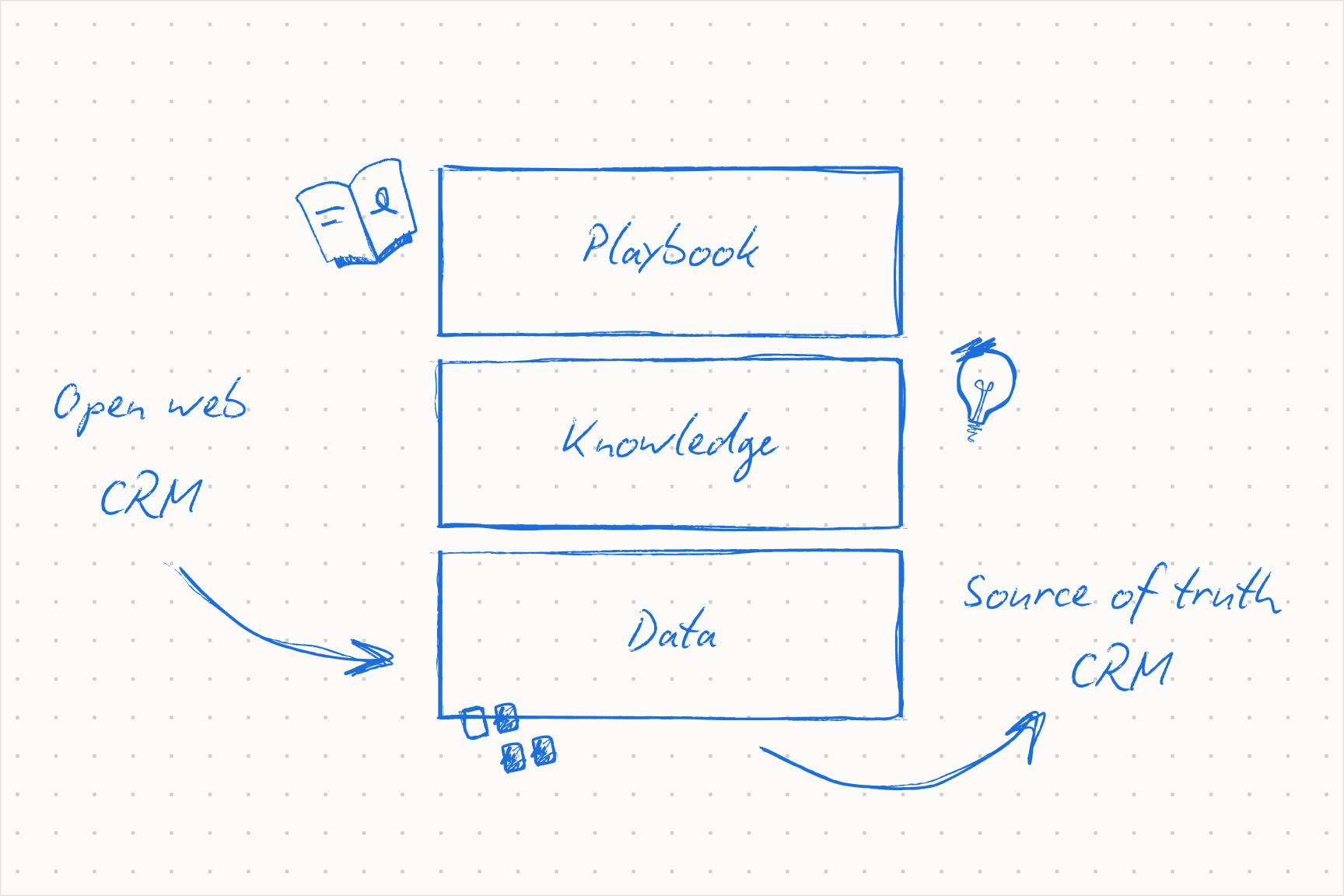
Playbook, knowledge, data
If an Agent is going to drive a conversation end-to-end (from the first message on a website through to a paid customer), it needs three things.
- A playbook. Your sales strategy in natural language. Not a structured workflow — a set of goals the Agent understands and executes against, the same way you’d brief a new rep on who routes to self-serve versus mid-market versus enterprise.
- Knowledge. Grounding in truth about your product — pricing plans, feature docs, battle cards. When a prospect asks about a competitor, the Agent has the right answer in the moment.
- Data flowing both ways. Context pulled in from research on the open web and from your CRM at the start of a conversation, and written back at the close so your team has a clean source of truth.
What this unlocks beyond the single conversation is re-engagement and latent demand. Re-engagement because the Agent sees the full funnel of conversations, spots prospects who went cold — lunchtime, disruption, lost the thread — and pulls them back in. Latent demand because you wouldn’t open your reps up to every prospect on your site with a pricing question. The Agent will. That’s demand you didn’t have before.
Metrics break. That's the point
The hard part is what happens next. The web team measures clicks to trial and has yearly goals tied to revenue. Put an AI Agent at the top of the funnel and fewer people are clicking trial. More people are having conversations. How do you resolve that?
The instinct is to protect the old metrics and add the new experience on top without disturbing anything. The better move is to step back. Customers are going through the journey differently now. How do I measure success in that new journey? What signals actually matter? The new metric still has to tie back to revenue. It just isn’t the old one.
Putting an Agent at the top of your funnel forces a reckoning with how well you measure top of funnel in the first place. A customer we worked with thought the Agent had broken their MQL numbers, only to realize their MQL definition wasn’t consistent across their funnels to begin with. The Agent didn’t break the metric. It surfaced that the metric was already broken.
Putting an Agent at the top of your funnel forces a reckoning with how well you measure top of funnel in the first place. A customer we worked with thought the Agent had broken their MQL numbers, only to realize their MQL definition wasn’t consistent across their funnels to begin with. The Agent didn’t break the metric. It surfaced that the metric was already broken.
Redeploy your most curious
Pluck whoever on your team has the most energy and curiosity, take them off their current role, and give them the autonomy to build, ignoring the shape of the existing funnel entirely. Give them a budget that lets them drive revenue and lose a little along the way, because some of what they try won’t work.
Treat this as a transformation, not a small adjustment. Build new roles around it — people analyzing performance, making sure your Agent adheres to strategy, adjusting as the business changes. And if the energy and curiosity you need aren’t already on your team, hire for them.
Treat this as a transformation, not a small adjustment. Build new roles around it — people analyzing performance, making sure your Agent adheres to strategy, adjusting as the business changes. And if the energy and curiosity you need aren’t already on your team, hire for them.
Rati Zvirawa
Senior Director of Product at Fin