Retention is a culture problem


Josh Epstein is CRO at Coder, the AI development infrastructure company, where he’s driven 5x revenue growth in 20 months. Before that, he spent six years at HashiCorp building the Global Accounts business from zero to $175M+ through their IPO, capping two decades of converting developer-led products into enterprise revenue.
Retention is the culture you build on day one. In this entry, Josh explains that if your team’s first instinct is to close the deal and worry about the customer later, that culture permeates and you can’t pull it back. If you’re not planning for that expansion before the first deal closes, you’re not planning to win.
Customer retention is a culture problem
Every decision you make should be based on your customers. The culture you build at the company drives their success or failure. If on day one you hire people to close deals and worry about customers later, they’ll cut corners and make cheap decisions that help the company and hurt the customer. My number-one principle with everyone I hire is that we make every decision first thinking about the impact on the customer. No conversation in my organization starts anywhere else.
Every decision you make should be based on your customers. The culture you build at the company drives their success or failure. If on day one you hire people to close deals and worry about customers later, they’ll cut corners and make cheap decisions that help the company and hurt the customer. My number-one principle with everyone I hire is that we make every decision first thinking about the impact on the customer. No conversation in my organization starts anywhere else.
That doesn’t mean you dial down aggression. You need sellers and sales engineers who are creative and money-driven, super impatient with their leadership, super patient with their customers. I don’t hire mercenaries. The balance comes from structure: CS paid on something other than booked revenue, support not comped on customer spend, and one document (the problem, the value hypothesis, the buyer) that follows every deal across the pre-sales to post-sales handoff.
The second deal is the signal
You always close the first deal. Super impressive demo, friendly referral, the rapport you and the buyer built… there are a million reasons the first one lands.
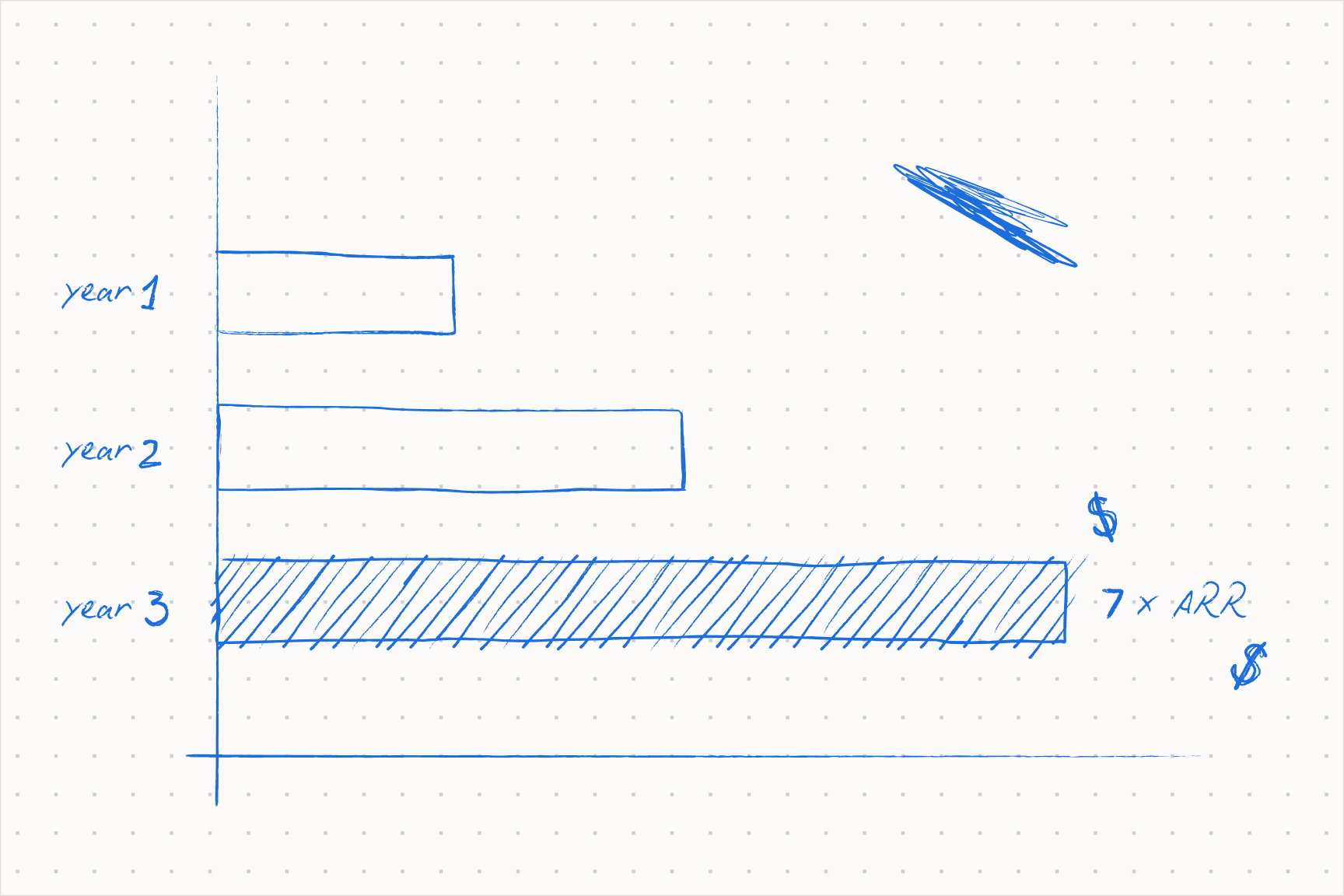
The second deal is the signal that customers are getting value and have some confidence that you will be there to support them. If you’re not planning and hiring and writing docs for that first expansion before the first deal closes, you’re not planning to win. In Enterprise sales I have seen patterns emerge, one of them I call 7 over 3: on average, a customer is seven times more valuable after three years. A hundred-thousand-dollar deal becomes a seven-hundred-thousand-dollar customer.
I tell customers that openly. My goal is for them to pay me seven times more in three years — seven times the value, not seven separate expansions. Importantly, the math runs the other way for them too: they get twenty, thirty, forty times that value back. I want them to be happy to pay us because they know it’s scaling the business we’re building for them.
The third founder
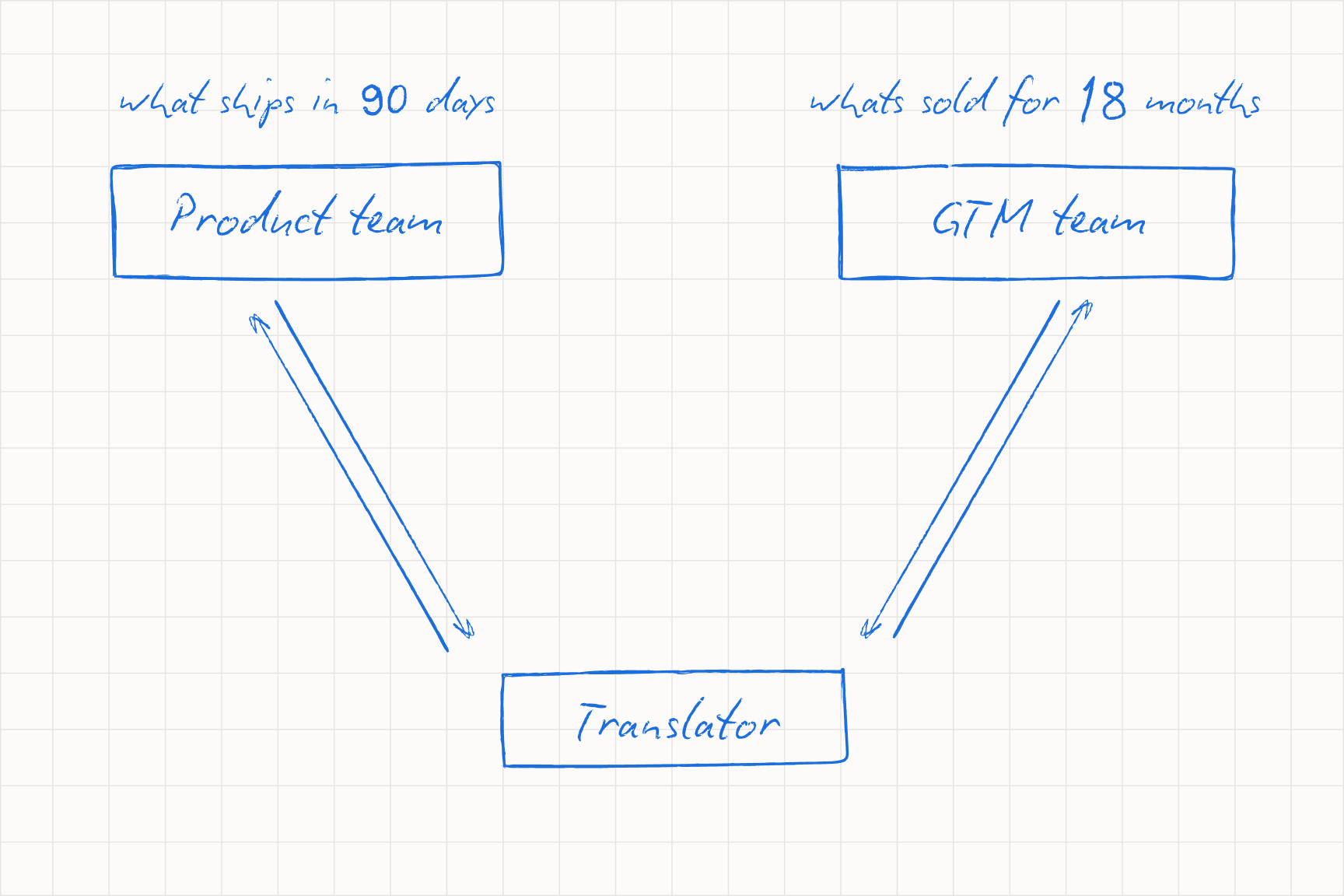
Most early companies have two founders: one engineering and product led, one go-to-market led. Usually, the GTM lead is an engineer who’s a little more personable. The real hire comes later: a program manager, a chief of staff, someone who ends up being “almost” the third founder. They’re the first person who can translate between customers and the people building the product. When the founder paints an eighteen-month vision, the third founder is the one who says: here’s what I can ship in ninety days, but you have to invest (buy software and provide feedback). We’re serving the food while we’re cooking it.
When you’re five people, every word out of the founder’s mouth is gold. Customers eat it up and lie to your face about how they plan to work with you. Customers love founders and want to be in the inner circle when the founder is great. It’s not until more people join the mix that you find out the beautiful symphony was a bit optimistic and real value needs to be proven. You have to fight the urge to put your smartest people in front of customers. The conversations belong to people with customer empathy who work to define the value customers get from your solution.
When you’re five people, every word out of the founder’s mouth is gold. Customers eat it up and lie to your face about how they plan to work with you. Customers love founders and want to be in the inner circle when the founder is great. It’s not until more people join the mix that you find out the beautiful symphony was a bit optimistic and real value needs to be proven. You have to fight the urge to put your smartest people in front of customers. The conversations belong to people with customer empathy who work to define the value customers get from your solution.
Speed is the renewal signal
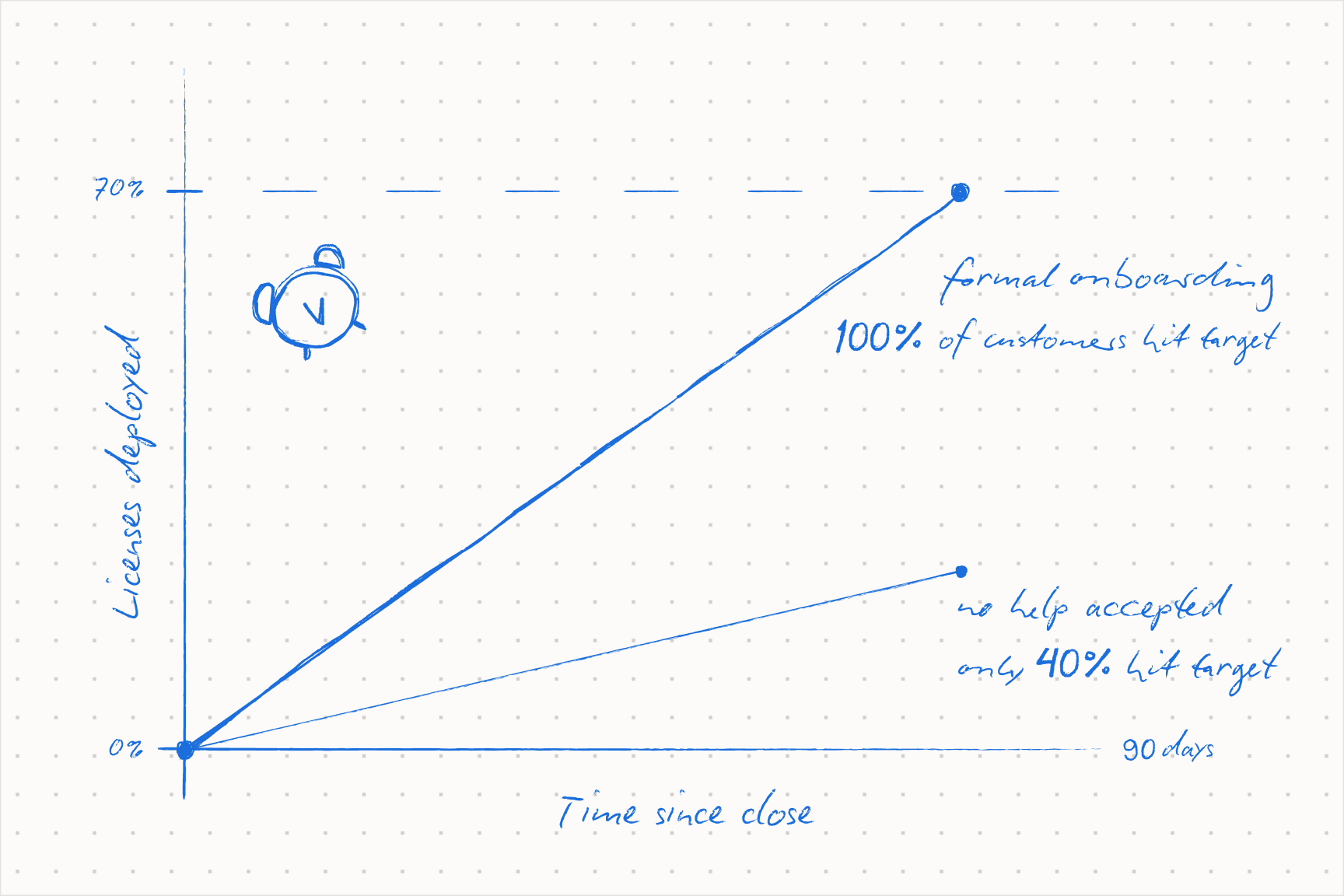
My CS leader created a strong metric (70/80/90) to predict customer retention and expansion. 70% of licenses deployed across 80% of customers within 90 days. That speed is the biggest single signal we have about whether a customer will renew and expand. The correlation runs backward too. Customers who went through our formal technical validation (success plan, CSM attached, us engaged from the start) hit 70 by 90 a hundred times out of a hundred. Customers who skipped that loop hit it forty percent of the time. And customers underscope constantly: a hundred licenses for a team of three hundred. They hit seventy percent deployment in thirty days and have to scramble to expand. We told them to buy bigger; they didn’t believe us.
Churn is visible 180 days in advance. They stop opening tickets. They stop returning CSM calls. The good signals from customers that are not usage and support are easy to get fooled by: a third independent support ticket means the tool has spread across teams, knowledge-based self-serve means someone’s building an internal practice. My old line is, if a company has an email distribution list with the word Coder in it, we win.
Churn is visible 180 days in advance. They stop opening tickets. They stop returning CSM calls. The good signals from customers that are not usage and support are easy to get fooled by: a third independent support ticket means the tool has spread across teams, knowledge-based self-serve means someone’s building an internal practice. My old line is, if a company has an email distribution list with the word Coder in it, we win.
Think two years out
The best advice I can give anyone building a GTM organization: force everyone to think farther out than they are comfortable with. The CEO should be thinking two to three years ahead, even when figuring out how to fund the business tomorrow. Every executive at one to two years, minimum. Teams and their leaders at three to six quarters.
We used to have a hundred-thousand-dollar floor with a fifty-thousand-dollar bypass by approval. Those customers got a break-fix support line and renewed flat. Long-term, expansions die in those deals. So we moved the floor to three hundred with smaller deals by exception, as long as they followed the process. I show customers the data. I’d rather they didn’t do the deal than give us fifty grand and churn a year later. A couple of executives said they’d prove us wrong. They have yet to.
The same instinct sets up the customer communication channels before you need them: customer journey mapping, reference architectures, a way for customers to raise their hand to give feedback, monthly newsletters, documentation of why every deal closed, a public knowledge base. Act bigger than you are; those automated processes give customers confidence they’re dealing with a bigger company.
Having that longer view is the secret to everybody’s success.
Josh Epstein
CRO at Coder